

09 July 2012
Bento Series Breaktime #5: Supermarket Chuukadon


08 July 2012
Bento Series Breaktime #4: Supermarket Sushi

Bento Series Breaktime #3: Food Court Food


Not-so-known Japan: Origins of Tempura
 |
| Tempura. Image from Wikipedia |
The word actually originated possibly from one of three Portuguese-related words:
- tempora, a Latin word that roughly translates to "a period of time" and more specifically to the Lenten / Christian holy days;
- tempero, a noun that refers to a spicy condiment or peppery seasoning; or
- temperar, a verb meaning "to season."
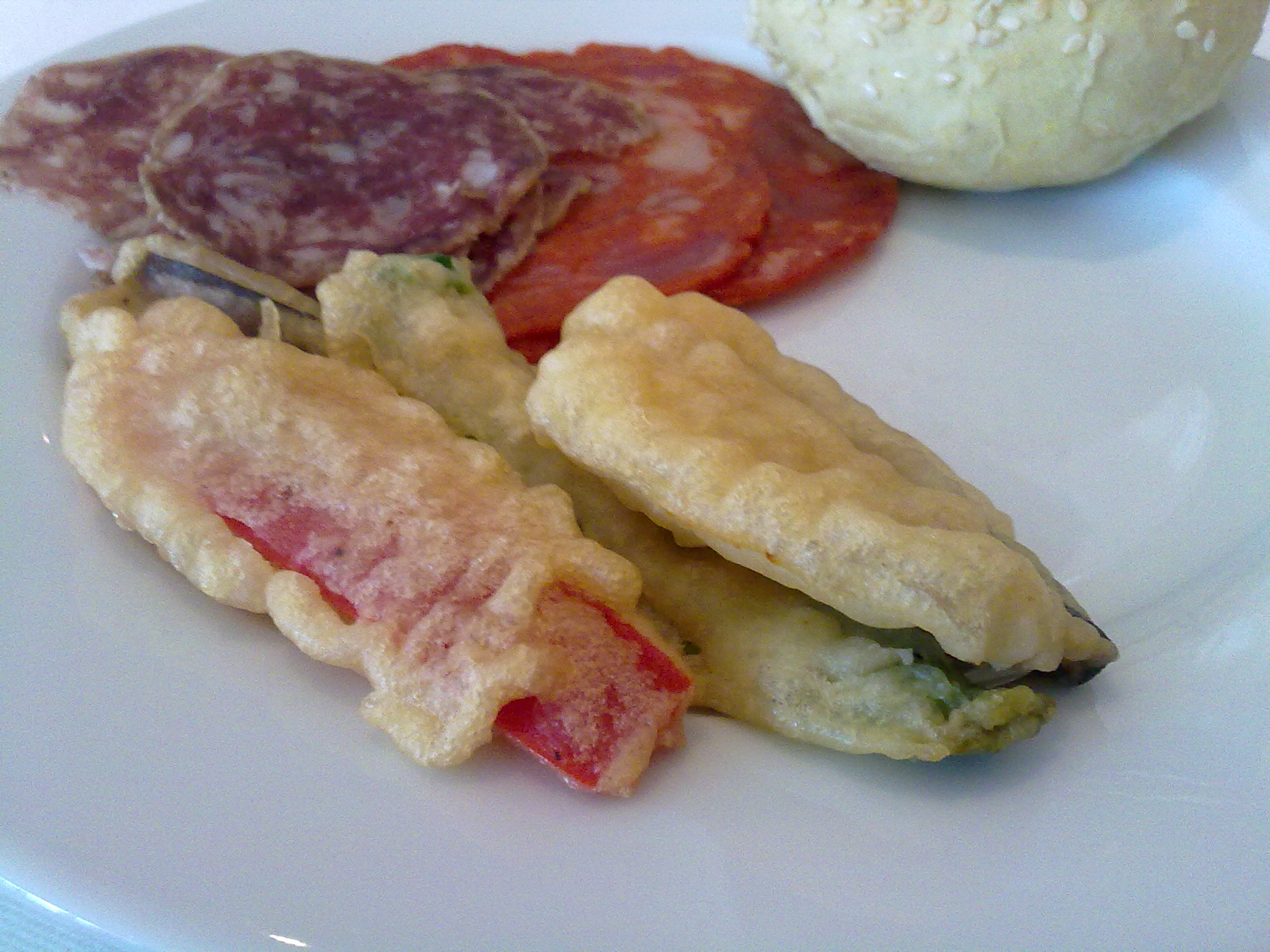 |
| Peixinhos da horta. Image from Wikipedia |
Why does tempura have kanji? It's in the same way that the words "Philippines," "Catholic," and many other words have kanji that are pronounced very similarly to their Western/English pronunciation. That's going to be a topic for next time. :-)
Is tempura then not Japanese food? It is. In the same way that ramen (Chinese in origin; i.e. lo mien) and gyoza (Chinese in origin; i.e. jiaozi) particularly those you eat here in Japan are very distinctly Japanese, different from the Chinese versions of those foods, and that lumpiang shanghai (Chinese in origin; i.e. chunjuan or lunpia) and pancit canton (Chinese in origin; i.e. chow mien, chaomian) are distinctly Filipino, different from the Chinese versions of those foods. In the same way that American English is still English, though distinctly American and very different from their British origins.
07 July 2012
Bento Series: #8

06 July 2012
Bento Series: #7

Bento Series: #6


05 July 2012
Bento Series: #5

Another regular bento from 3F (398 yen): fried chicken fillets, ground pork with something crunchy, something like pork asado, scrambled eggs, spinach, and a sprinkling of green peas. Sorry for the blurry photo!
Bento Series: #4

03 July 2012
Bento Series BreakTime #2: Cafeteria food
 |
| Photo taken by Rei -- thanks! |
sauce (294 yen). The pickle sauce was actually quite nice. The dish came with
french fries and an okra and radish garnish. Ate it with the usual
suspects: M-size gohan (rice), annin doufu (almond jelly, 84 yen), and hot tea (free, drink-all-you-can).
Oh, and have I mentioned? I asked a Japanese colleague if annin doufu is a traditional Japanese food, and he said it's Chinese. I then asked my Chinese colleagues about it and they said it's Japanese. I think it's Chinese in origin, and maybe this one is now a Japanized version. So I think they're all correct, one way or another.
Bento Series: #3

398 yen from 3F: dried salty fish flakes, scrambled eggs, fried breaded squid(?) fillet, fish fillet with tartar sauce, shredded nori, spinach/mustard, carrot & lotus root siding, all on top of rice. The last two bento are like seasonal only; this one is a regular and much more Japanese. Yum.
01 July 2012
A couple more ways to say "thank you" and "sorry" in Japanese
You all probably now about "Arigatou gozaimasu," which might translate to "Thank you, sir/ma'am" in English or "Salamat po" in Filipino, or "Sumimasen," which could mean "Excuse me" or "Sorry," or "Paumanhin po." Of course you can also just say "Arigatou" which translates simply to "Thank you" or "Salamat." Or, you can say "Doumo arigatou gozaimasu," which translates to "Thank you very much, sir/ma'am" or "Maraming salamat po."
But you can also just say "Doumo," which translates to "Thanks!" The Japanese expression also has a past-tense version, i.e. "Doumo arigatou gozaimashita." For example, when you board a bus, there will be a recorded announcement that says "Arigatou gozaimasu" in present tense; i.e. thank you for being on the bus right now. When the bus is about to reach its destination, the announcement will say "Arigatou gozaimashita" in past tense - to thank you for having ridden the bus.
Before I came here to Japan, I was taught that Sumimasen means Excuse Me or Sorry. I played basketball with locals and whenever they missed stuff and what not, I heard them say something else: "Gomenasai." Now this is what actually means Sorry. And Sorry only. Get the difference between Sumimasen and Gomenasai? Anyway, there is another way to say sorry: Shitsurei Shimasu or simply Shitsurei, except what it really means is "I'm being impolite" or "Excuse me for being rude" or "Mawalang galang na po." And so while it also means you're being sorry, these three ways (Sumimasen, Gomenasai, Shitsurei Shimasu) are used in very distinct situations.
Anyway, there are two more ways to say thanks. One is "Kansha shimasu," which also means Thanks or I Appreciate (You/Your ___). I've heard the word Kansha before in church, where we say "Kami ni Kansha," or Thanks Be To God, after some bible readings. The second one is by "Okagesama de ..." which translates to "Thanks to you, ..." or "Salamat sa iyo, ..." As indicated by my use of leaders (3 dots), "Okagesama de" is accompanied by an explanation of why you are thanking. But again, there's different situations where you might use the Arigatou form, Kansha shimasu, or the Okagesama de form.
Well, I hope you learned something new today! For reading through this article, arigatou gozaimashita!
30 June 2012
Bento Series Breaktime #1: Cafeteria food


29 June 2012
Bento Series: #2
 |
| "Demi cheese chicken katsu" |
Chicken katsu (a little bit irregularly shaped compared to the normal katsu stuff) with demi-glaze sauce and cheese that doubles as pasta sauce for the fettuccine bedding. Rice with black & white sesame seed sprinkles, similar to the last one. Egg, broccoli, and onion side salad.
498 yen, again from the 3F convenience store.
27 June 2012
Bento Series: #1
I'm starting a new series on the Japan! Japan! Blog about bento meals I eat while in Japan. Bento, as you know, means "lunch box," and so you shouldn't really say Bento Box because that would be like lunch box box. What a 1-2 punch that would be. Anyway, I'll post this series mostly from my mobile device while on the go (so please excuse typos and what not), and almost instantly, and let's see where we will go with this. These bento meals, I usually buy them at convenience stores (konbini), but they're also available at supermarkets and even some restaurants and stand-alone bento stores. Hope you like this series!

This first one features rice, of course, but sprinkled with black and regular sesame seeds. Corn and spinach on the side. Some spaghetti and bean sprout bedding for the main course, which is two pieces "ebi furai" - fried non-tempura breaded shrimp - with tartar(?) sauce and (pork?) burger with "demi-glaze?" (i.e. sweet) sauce. 550 yen. Yes, expensive.
24 June 2012
Not-so-known Japan: Premium Outlets!
On the topic of
fuji-san,
not-so-known,
travels,
trips
 My first experience of outlet malls were in Northern California, practically 20 years ago already. I remember US$1.00 GAP t-shirts and what not. Not having that much money then though, I think I just settled for a GAP cap (I love owning GAP caps) and I think a belt and maybe one or two shirts. It might have all cost me just under US$20. This is 20 years ago, though. During that time maybe those GAP shirts were selling for like $5 to $7? Unfortunately, that's what I look for still - shirts for a steal. Nowadays, GAP shirts are like $10 to $20 or more, and I'm happy to find $5 shirts at outlet stores or on clearance sale racks.
I also look for shoes at outlet stores, and I'd usually go for $40 shoes (that were previously as high as $150 maybe), and if there's something I really want I can go for as much as $60 on shoes. Any more than those prices, no way. I might have bought watches, too, and maybe I would have $40 to $60 upper limits on watches as well.
I've had outlet mall experiences in other parts of California, as well as in New Jersey where I think there's no tax on wearable items. I've had some outlet store experiences in the Philippines as well. But basically, I have my $5 and $40 limit on shirts and shoes and watches as I mentioned. Now when I heard about the Premium Outlets in Japan, I got sort of excited.
But that excitement didn't last very long. The nearest one is in Gotemba. It's at least an hour and a half from my place. Too far. That's the one problem with these outlet malls, though. They're in far away places because they need the really low real estate values so that they can still realize profits. However, a couple of good friends visited Japan, and they wanted to tour the Fuji-Hakone area. They found out about the Gotemba Premium Outlets, and wanted to go make a side trip there as well. As you might know, I already posted my Odawara-Hakone-Gotemba-Fuji video a few weeks back, and to the Premium Outlets we went indeed.
 Guess what stuff I found and bought? Nada! Everything was still way expensive. The cheapest shirts I can find were $10. And these are plain, meant-as-undershirts kind of stuff! Anyway, even the restaurants there, except for McDonald's maybe, are a bit on the expensive side as well, and we just settled for Tully's Coffee hotdog sandwiches, which we could find all around Kanagawa and Tokyo as well.
So we went home with nothing except... And this is the best part. And you've probably seen this already in my O-Ha-Go-Fu video: The best views of Mt. Fuji! I think with the trip to the Premium Outlets practically "free" since it was just a side trip for our Hakone Area tour which was already paid for, I think it was worth it. Unfortunately we did get there when there were more clouds in the sky already and so it wasn't the most optimal sighting of Mt. Fuji. But it felt great nonetheless. Imagine, (window) shopping with Mt. Fuji in the background.
 |
| From carbonaramara.com |
Anyway, if you wish to go to the Gotemba Premium Outlets from the Kanto (Tokyo/Kanagawa/Saitama/Chiba) area, check out their website by clicking this ad-supported link. Or just take the Odakyu Line express or rapid express train bound for Odawara, get off at Shin-Matsuda Station, walk towards the JR Matsuda station and take the JR Gotemba Line for Gotemba. At Gotemba, there are free shuttle buses to/from the outlet mall. The last bus from the outlet mall going back to Gotemba Station is around 7pm, so make sure to catch that or else you will need to take a taxi. From Tokyo, Saitama, or Chiba, just go to Shinjuku Station to get to the Odakyu Line. UPDATE: If you are taking the Odakyu Hakone Free Pass like we did, it's a free ride around Hakone as well as to the Gotemba Premium Outlets as well.
17 June 2012
Found in Japan: USB Flash Drives
On the topic of
cultures,
japan,
miscellaneous,
tokyo,
travels
Can a picture say a thousand words? This we found at the souvenir shop at the observation deck of the Tokyo Metropolitan Government Building in Shinjuku, Tokyo, Japan. There's no entrance fee to go up there, by the way.


15 June 2012
Not-so-known Japan: Ajisai Matsuri (Hydrangea Festival)
On the topic of
cultures,
japan,
not-so-known
 |
| From Wikipedia |

10 June 2012
Not-so-known Japan: Tobu World Square
On the topic of
japan,
not-so-known,
places
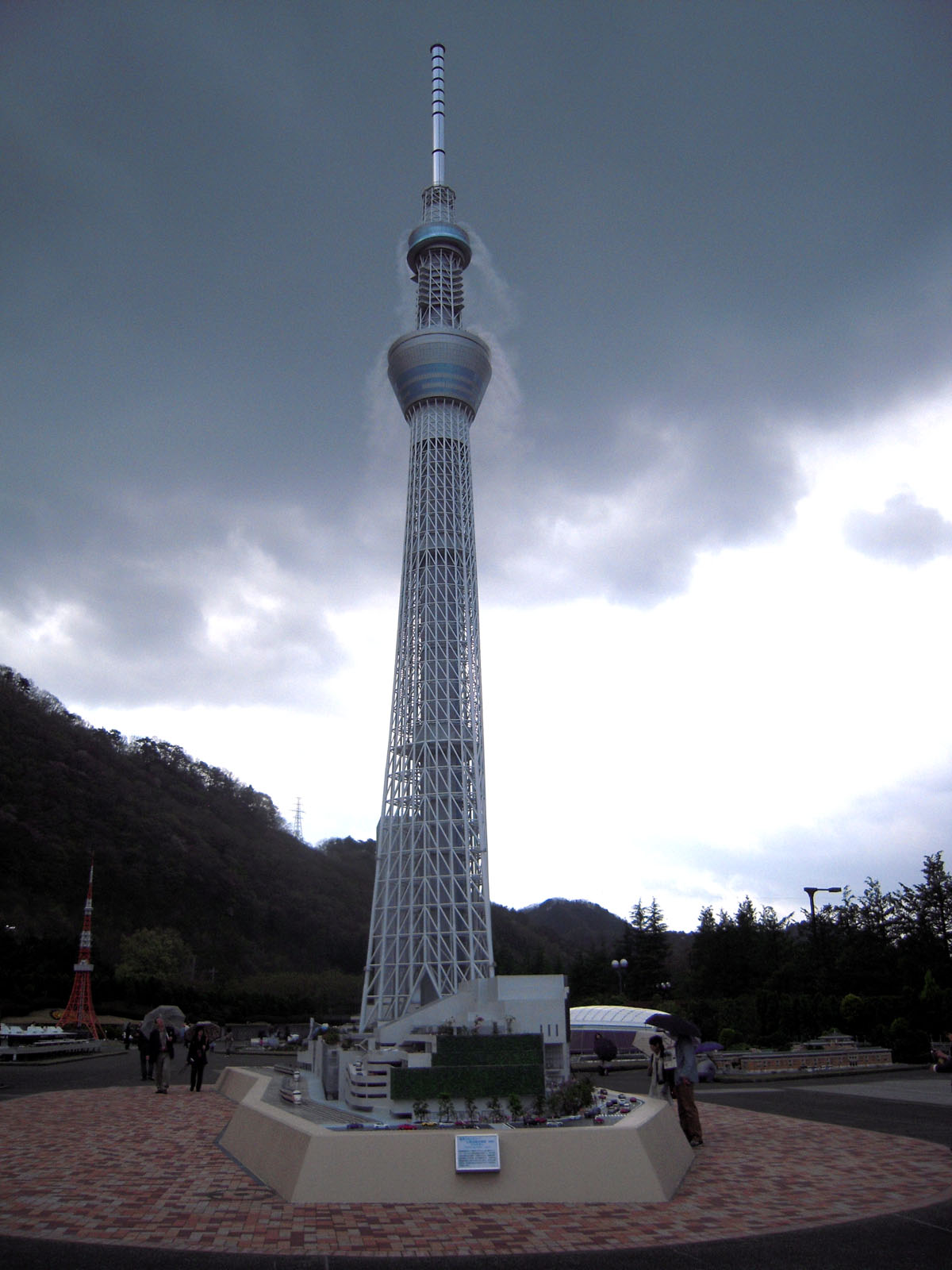 |
| Replica of Tokyo Sky Tree at Tobu World Square |
Tobu World Square.
If you're from the Philippines and old enough, you've probably been to the Nayong Pilipino Park near Ninoy Aquino International Airport Terminal 2, where they recreated almost all of the Philippines' natural wonders. If Nayong Pilipino was to the Philippines, Tobu World Square is to the world. Almost.
There are 1/25 scale replicas of different wonders from around the world, old and new, like Ankor Wat, the Pyramids of Egypt, the Parthenon, the Statue of Liberty, the Tokyo Tower, the Eiffel Tower, the White House, even the (old) World Trade Center's twin towers, La Sagrada Familia, the Great Wall of China, the Taj Mahal, and much more.
The full list of replicas is here: http://adf.ly/8V4fc
Check out the photos in this interactive webpage: http://adf.ly/8V4Zs
The home page in English is here: http://adf.ly/8V4UK
Admission is only JPY 2,500 for junior high school students (12-year-olds?) and older, JPY 1,200 for ages 4 to 12. There are discounts for groups and persons with disabilities.
06 June 2012
Leaving Japan Stress Free. A guide for expats leaving Japan
On the topic of
welcome
Check it out on SayonaraJapan.com.
Subscribe to:
Posts (Atom)