The better question to ask, actually, is: "Is there such a thing as Usuter Sauce?"

Showing posts with label philippines. Show all posts
Showing posts with label philippines. Show all posts
16 June 2013


23 March 2013
Bento! #257: Fruits from...
On the topic of
food,
japan,
philippines
...the Philippines! Love 'em. They're healthy, too.
 |
| Painappuru / パイナップル |
 |
| Banana / バナナ |
 |
| They're not exactly large. This one's 128 yen I think though I usually get the 98 yen ones. |
22 March 2013
Coming to Tokyo (Narita) from/via Manila on Philippine Airlines?
On the topic of
airports,
japan,
philippines,
problems
 |
| Image from Wikipedia. |
Don't. Here's the problem: they only have one flight per day and it arrives in Narita at around 8pm. Because of that schedule, I always miss the last (8:30pm) bus going straight home. So I take another bus instead and just take an extra train ride. No biggie. But here's the real problem: if the flight gets delayed. I have an aunt whose PAL flight just got delayed 2 hours and so she missed all buses going anywhere. If she were able to fast-track her way through immigration, baggage pick-up, and customs, and got on the last bus (10:30pm), she still wouldn't have made it to my apartment because there would be no more trains. So, her only option was to stay at a hotel near Narita airport for a night and just take the first bus the morning after.
Here's the other problem: going back home. The PAL flight leaves Narita at around 9:30am. This means, if you have to be there 2 hours earlier, you have to leave Tokyo by 6am. From our city, you have to take the 5am bus. From my apartment, you have to take a taxi at 4:30am to make sure you get the 5am bus, and make sure you're at the airport at least 2 hours before your departure time. If I miss that 5am bus, there's a big chance I might miss my flight altogether. What I do then is I just commute to Narita and stay at a hotel around the area the night before. Because I don't want to risk missing my flight going home (without having to pay extra extra). Of course, you can always hope that it's this flight that gets delayed...
14 February 2013
"Itsumo" lyrics and translation - final correct version?
On the topic of
cultures,
japan,
nihongo,
philippines
いつも
Many have already attempted this before, but I think these are the exact words used in the lyrics of the chorus of "Itsumo," the rap song by Dice & K9, a Filipino rap group, as well as the more correct translation. "Itsumo" is basically a rap song in English, but with a melodic chorus in Japanese. To refresh your mind (or to introduce you to the song), here is the link to the official music video. Sorry, because of content restrictions, I can't embed the music video directly.If you listen to the song without native-speaker-level Nihongo, or if you just check out the lyrics scattering around the internet, you might think it's this:
Itsumo kokoro we hoshi itsukaEveryone knows what itsumo means - "always." And people have probably gotten the 2nd and 4th lines right, because they are the same exact lines in the popular song, "First Love," by Japanese-American Hikaru Utada (宇多田 ヒカル). But well, not everyone has. Here are the more correct lyrics in the correct Romaji form:
dare katu mata koi nei utchitimo
itsumo kokoro nei eiro itsumo
anata dake no basho ga aru kara
Itsumo, kokoro he hoshii,Of course, when someone (specially a non-native Japanese speaker) sings the above lyrics, they probably won't come out as spelled out.
Itsuka, dareka to mata koi ni ochite mo.
Itsumo, kokoro ni iru.
Itsumo, anata dake no basho ga aru kara.
If we translate the lyrics now literally, we have:
Always, to my mind, I likeAnd the more correct(?) translation:
Someday, with someone again (I) will fall in love also.
Always, in my heart is (you?)
Always, for you only there is a place, that's why.
I always like to think that someday, I could also fall in love with someone again.Any objections? :D
Because you are always in my heart, where there is always a place only for you.
Anyways, if you're interested, you can also check out Google's translation at this link.
11 February 2013
Japanese-style spaghetti and pizza in Manila!
On the topic of
food,
japan,
nihongo,
philippines
http://www.jessicarulestheuniverse.com/2013/01/31/japanese-cooking-italian/
Apparently, if you're a Japan fan, it will be all worth the money. If you really like American-style pizza and pasta, or the "true," "original" Italian pizza and pasta, of course, this place will disappoint.
The name of the place is Yomenya Goemon. Men means noodle(s). Ya means store/shop/house. Who (or what) is Goemon? And what's the Yo?
Apparently, the restaurant chain is indeed Japanese and they also have a presence in Singapore and Shanghai. Around Japan, they're all over the country, and they even have one in Atsugi!
Oh, and the Yo, if I tried to Google Translate, is the same as Hiroshi, which I think is a Japanese name but it seems it might also mean "foreign." But now, that makes sense: foreign noodles shop.
Apparently, this is the kanji for yomenya goemon: 洋麺屋 五右衛門. The go (first kanji) means the number five. The second kanji means right (i.e. not left). The last kanji means gate. The third kanji means Diet guard (i.e. security personnel at the house of elected Diet members / ministers?). Hmmmm.
Anyone with better answers?
Apparently, if you're a Japan fan, it will be all worth the money. If you really like American-style pizza and pasta, or the "true," "original" Italian pizza and pasta, of course, this place will disappoint.
The name of the place is Yomenya Goemon. Men means noodle(s). Ya means store/shop/house. Who (or what) is Goemon? And what's the Yo?
Apparently, the restaurant chain is indeed Japanese and they also have a presence in Singapore and Shanghai. Around Japan, they're all over the country, and they even have one in Atsugi!
Oh, and the Yo, if I tried to Google Translate, is the same as Hiroshi, which I think is a Japanese name but it seems it might also mean "foreign." But now, that makes sense: foreign noodles shop.
Apparently, this is the kanji for yomenya goemon: 洋麺屋 五右衛門. The go (first kanji) means the number five. The second kanji means right (i.e. not left). The last kanji means gate. The third kanji means Diet guard (i.e. security personnel at the house of elected Diet members / ministers?). Hmmmm.
Anyone with better answers?
14 January 2013
Bento! #203: Jollibee's take on the Tonkatsu
On the topic of
bento,
food,
philippines
Well it's not technically a tonkatsu. First, they call it "crispy pork steak." 2nd, it's not cut, therefore it's not katsu. The sauce is also a little bit sweet -- the Filipino way! -- and very different from tonkatsu sauce. Together with a cream-based soup and a drink and rice, you get this for only 76 pesos (150 yen).


The breading also looks closer to that for ebi fry than the typical tonkatsu in Japan.

But of course I had to order a Chickenjoy!
13 January 2013
Bento! #202: Yabu, House of Katsu (Restaurant), Philippines
On the topic of
bento,
food,
philippines
My Filipino friend said "Yabu" stood for "82" which is a lucky number in Japan. I didn't find yabu in my dictionary though, but I found that 8 could indeed be ya (think yattsu) and 2 could be fu (therefore it could be bu) (i.e. think futatsu). I asked my Japanese friend if he knew what yabu meant and he said it stands for bush. He also said that 82 is not at all a lucky number in Japan. He added that Yabu might be a family name and that the owners of this restaurant are named Yabu. Searching the internet, it seems that this is a Manila-only (for now) restaurant. But you know, their food didn't taste unfamiliar to my Japan-trained palate. And people are loving this place.
 |
| There's always long queues. |
Japan stuff in the Philippines
On the topic of
cultures,
philippines
And more specifically, at the Robinson's Magnolia mall.


"100-yen stores" have been in the Philippines for a while now, but they sell the regular items at 88 pesos = i.e. around 170 yen. They do have 55 and 66 peso items, but those aren't typical Daiso items. Here, you might also notice they have a "Banzai" sale with a handful of items at only 25 or 50 pesos, but again, not exactly Daiso items.

I would think there's also a UNIQLO already at this mall. So far, I know there's one at the SM Mall of Asia and one at The Block at SM North Edsa. Last I checked, MUJI sells 1000 yen items in Japan for 1000 pesos in the Philippines; i.e. double the price.

This thing is big in Manila, but I've only seen one so far in Japan, in Akihabara in Tokyo, and it seemed to be just a little hole in the wall.

"100-yen stores" have been in the Philippines for a while now, but they sell the regular items at 88 pesos = i.e. around 170 yen. They do have 55 and 66 peso items, but those aren't typical Daiso items. Here, you might also notice they have a "Banzai" sale with a handful of items at only 25 or 50 pesos, but again, not exactly Daiso items.
11 January 2013
Bento BreakTime: Oliva Bistro Cafe, Philippines
On the topic of
food,
philippines
Last August, I visited home and ate with my wife at Oliva Bistro Cafe. Great food! Check out the photos at this link:
http://carbonaramara.blogspot.jp/2013/01/oliva-bistro-cafe.html
http://carbonaramara.blogspot.jp/2013/01/oliva-bistro-cafe.html
Bento! #200: Kamirori Japanese Cafe, Philippines
On the topic of
bento,
food,
philippines

To celebrate an important occasion, I went to Kamirori in the Philippines.
As my friends would say, this would be "Filipino-style Japanese food." Price-wise, it felt similar to those in Japan. That is, if you want a truly Japanese experience, this is not the place to go. If you just want to fill your craving for Japanese food, this won't really be worth it. But other than that, the food tasted great. It's just not as Japanese as someone from Japan would expect.
I asked a Japanese friend if he knows what Kamirori means. He said he never heard of the term. I'm thinking that this might probably be kami ryouri originally, i.e. heavenly cuisine, but that's just a guess.
22 July 2012
Marine Day
On the topic of
cultures,
holidays,
japan,
philippines
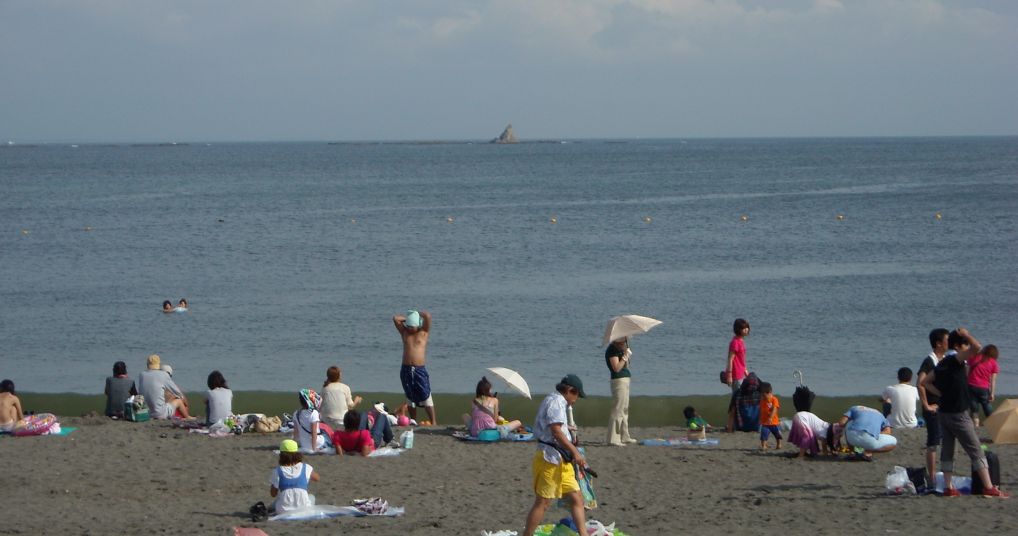 |
| A beach on Chigasaki, the nearest one to my place. Never been there yet and I probably won't ever be able to go. Photo from Wikipedia. |
15 July 2012
Kanji for "Filipino" and "Catholic"
On the topic of
cultures,
japan,
nihongo,
philippines
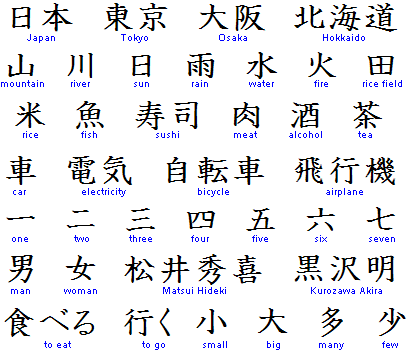 |
| Image from japan-guide.com |
加特力比律賓人.
That supposedly reads "Katorikku Firippin Jin." But actually, these characters are not used for Catholic or Filipino. They just simply write:
30 April 2012
How Nihongo has given birth to new languages, and the case of the missing Beef Misono, Chicken Teriyaki, and Torikatsu

23 March 2012
The fastest and cheapest way to remit money to the Philippines from Japan [Updated]
On the topic of
filipinos,
philippines

Oh, the difficulties of having to pay bills at home while you're based in a very foreign land. I have told you guys about GCASH.JP through an earlier, short blog post, but man, o man, it is only now I've dipped my hands in it and it's like… holy water! (For you pundits out there: I said it's only like holy water; it is of course nothing like real holy water.) But it is truly a miracle, a real blessing from Up Above. Amen.
Long story short, I have some cash in my bank account here in Japan, and I needed to remit some to my bank account in Manila. How long did it take using GCASH? About an hour, and all from the comfort of my own home. How much did it cost? It cost me around 3.25% of my remittance amount1. That's very cheap! And very fast. Now that's what you call a wire transfer! I ♥ GCASH.JP!!!
Contrast all that now with the time when I transferred using my Japan-based bank's over-the-counter remittance services for the same amount of remittance applied at the same time of the day (nearly 3pm): roughly 1 banking day, and 11.6% of my remittance amount1! That's more than 3 times the cost!
Okay, the length of time it takes is not really a good point for comparison. I had internet banking set-up for my Japan bank account, and so that helped hasten things up. Plus, I also had to pre-register on to GCASH. Now, to go to my bank branch, I had to actually spend at most around 220 pesos for my roundtrip bus fare and 40 extra minutes for the trip. It was just before 3pm when I got to the bank, and we were told that the transfer might not be made until the next banking day. Otherwise, maybe it could have been just as fast, save for the 40 minutes to travel to our bank branch.
Enter the internet banking facilities of my bank. What actually happens is I first transfer to a pre-assigned local Japanese bank account associated with my GCASH account. I just do it online from the comfort of my own home, no need to pre-enroll my transferees' accounts (unlike BPI, but I heard China Bank and a few other banks allow you to make funds transfer within the Philippines without pre-enrolling as well).
In under 10 minutes, the funds from my Japan bank account is already in my GCASH account. And then in around 30 minutes or so, the funds from my GCASH account are already in my Philippines-based bank account.
I should also mention though that the 3.25% tax for remittance via GCASH is because I have a coupon, given to new GCASH members, expiring by the end of March. If without the coupon I would have paid around maybe 4%, which is still not so bad, and still nearly 3 times less the cost for transferring bank-to-bank, Japan-to-Philippines.
I should also mention that GCASH's Customer Support Staff are a delight. I interacted with an English-speaking Japanese via e-mail, and then later I got a call from a Tagalog-speaking Filipina who was very polite and very helpful (although she did not really have the answers to my issue that time). Speaking about my issue, I was on GCASH's English website and my bank's is in Japanese, so there was a little bit of a disconnect there even though I could use Google's translation functions, and that led to my problem but I eventually figured it all out. Thanks also to Google!
My local Japanese bank, by the way, is Sumitomo Mitsui Banking Corporation. I would think that services offered through other Japanese banks are on the same level. Being in a city far away from Tokyo, my local branch does not have people who can speak English so that was a difficulty. Just by using the online banking facilities and Google Chrome as web browser, it didn't matter as much that the website is in Japanese.
GCASH, by the way, is a service by Softbank Payment Services here in Japan, and "guaranteed" by Globe (yes, the cellphone company) in the Philippines. You can do a bank transfer to over 15 other banks in the Philippines, including Citibank, Chinabank, PNB, and MetroBank2. You can also transfer to someone's GCASH account in the Philippines as "Mobile Money" - they can use it as prepaid cellphone load, and a number of other things, but I think it might be difficult to "withdraw" the cash. The remit-to-GCASH-in-the-Philippines option I believe has even cheaper rates. You can also remit to selected remittance centers in the Philippines, like Globe Stores, some pawnshops, and some banks. I can also actually transfer to my GCASH.JP account through convenience stores, but that costs a little bit more and the nearest one is about a 5-minute walk away.
2 [UPDATE/ADDENDUM] They sort of advertise that you can transfer to PNB and MetroBank bank accounts, and it gives you the impression that you would need to have an account at only those two banks. But the truth is, you can transfer to probably all Bancnet member banks. But there are some additional requirements for certain banks (I forgot which ones though), and you'll be informed of those requirements as you use the service. Anyways, the one big question we have is: This is somewhat a service of Globe - an Ayala company - and yet why does it seem impossible to transfer to BPI - another Ayala company!? That is so weird. But anyway, in the experience I recounted in this blog post, we transferred to ChinaBank. Tell us in the comments how different your experience might be if you had used other banks, or if you had used ChinaBank as well.
20 March 2012
5-Thirsty in Japan?
On the topic of
cultures,
japan,
philippines
In the Philippines, one of the beer companies featured a TV commercial which introduced the concept of "5-Thirsty," i.e. at 5:30pm, after work hours, it's time to invite friends and drink... beer, of course.
Anyway, here in Japan, I've noticed something happening at around 5:30pm as well. And no, it's actually not a 5-Thirsty thing. I've noticed it for a long time now, but it is only today that I paid attention.
It's two things.
Firstly, there are PA ("public address," in case you didn't know) systems in all neighborhoods here in Japan. It has many benefits, obviously, like when there's some impending disaster like a tornado or tsunami or fire and so on, or some message from the local government (and maybe national government?) needs to be disseminated fast.
But, they play chime tunes as well on those PA systems. Like, if I'm not mistaken, at 12 noon, they play a chime to signal 12 noon. Maybe it is to signal lunch break.
In schools, at the start and at the end of every class, or at the start and at the end of public announcements from the school administration as well, there's a chime that plays, that I believe is usually the same sound as the Big Ben's chime.
15 minutes or less before closing time, stores usually play an Auld Lang Syne chime right before announcing closing time.
Today, at exactly 5pm, there's this chime that played again for the Nth time now since I've been here in Japan. I did some search and apparently it's called "the Chime of Love," and the tune is from a song / nursery rhyme entitled "Yuyake Koyake," which I believe literally translates to Sunset Burning. If you haven't guessed yet, it is to signal the sunset and it is meant to inform children, for their own safety, that it is time to go home.
Here's a video capturing the Yuyake Koyake "chime of love" moment during summertime at one rather urban neighborhood in Japan: http://youtu.be/18-YzchO6xs
And here's a video of someone playing a more complex version of the tune on piano: http://youtu.be/k3rtMAr79AQ
I asked a Japanese friend and, considering the different sunset times per season here, he informed me that Yuyake Koyake does not usually play at 5pm. Here are the play times, at least here in Atsugi, Kanagawa:
March, April - 5pm
May to August - 5:30pm
September, October - 5pm
November to February - 4:30pm
For more information, I found this explanation (and another recording of an actual Yuyake Koyake "chime of love" at another neighborhood here in Japan) which might be interesting to you as well: http://youtu.be/Iez63nk6J6w
Anyway, here in Japan, I've noticed something happening at around 5:30pm as well. And no, it's actually not a 5-Thirsty thing. I've noticed it for a long time now, but it is only today that I paid attention.
It's two things.
Firstly, there are PA ("public address," in case you didn't know) systems in all neighborhoods here in Japan. It has many benefits, obviously, like when there's some impending disaster like a tornado or tsunami or fire and so on, or some message from the local government (and maybe national government?) needs to be disseminated fast.
But, they play chime tunes as well on those PA systems. Like, if I'm not mistaken, at 12 noon, they play a chime to signal 12 noon. Maybe it is to signal lunch break.
In schools, at the start and at the end of every class, or at the start and at the end of public announcements from the school administration as well, there's a chime that plays, that I believe is usually the same sound as the Big Ben's chime.
15 minutes or less before closing time, stores usually play an Auld Lang Syne chime right before announcing closing time.
Today, at exactly 5pm, there's this chime that played again for the Nth time now since I've been here in Japan. I did some search and apparently it's called "the Chime of Love," and the tune is from a song / nursery rhyme entitled "Yuyake Koyake," which I believe literally translates to Sunset Burning. If you haven't guessed yet, it is to signal the sunset and it is meant to inform children, for their own safety, that it is time to go home.
Here's a video capturing the Yuyake Koyake "chime of love" moment during summertime at one rather urban neighborhood in Japan: http://youtu.be/18-YzchO6xs
And here's a video of someone playing a more complex version of the tune on piano: http://youtu.be/k3rtMAr79AQ
I asked a Japanese friend and, considering the different sunset times per season here, he informed me that Yuyake Koyake does not usually play at 5pm. Here are the play times, at least here in Atsugi, Kanagawa:
March, April - 5pm
May to August - 5:30pm
September, October - 5pm
November to February - 4:30pm
For more information, I found this explanation (and another recording of an actual Yuyake Koyake "chime of love" at another neighborhood here in Japan) which might be interesting to you as well: http://youtu.be/Iez63nk6J6w
03 August 2010
Fuji-san!
Today I had to wake up really early because we had to be at the meeting point near Hon-Atsugi by 8:45am, for our TPU-organized field trip to the Fuji-Hakone area. So that meant we (PhD students) had to leave from our apartment at 8:00am.
But alas, I had a hard time sleeping yet again (maybe 4am?) and so I woke up only around 7:50am - if not for a phone call from one of my fellow PhD students. My alarm clock which I set for 7am did not work for me at all. :(
Anyways, so obviously no more shower or breakfast or the "2nd thing" you should do after waking up, and then off by bicycle we went to Hon-Atsugi. We probably left around 8:10am already, and we arrived at the meeting point at just before 8:45am. Right on time.
And so the 2 hour bus trip, first to this place called "Fuji Harness," which is a guide dog training facility. http://www.fuji-harness.net/ The dogs of course are very cute and very adorable. Unfortunately no baby dogs, which are even cuter. The purpose of this trip is actually to admire the beautiful architecture, which has no less than Mt Fuji in the backdrop. The complex is a very nice piece of architecture indeed. There was a demo show to show us what the guide dogs are trained for. It is funny that the show's host was speaking to all of us in Japanese but he spoke in English to the dog! But other than that, it wasn't really an entertaining show. No acrobatic acts like running through rings of fire or somersaults. The host was just showing that the dogs would guide blind people:
1. given a choice between two doors/paths, the dog will choose the wider one so that he (or she) can guide the blind person continuously through the door/path;
2. away from obstacles that the blind person could bump his/her head into;
3. away from obstacles that the blind person might trip on; and
4. safely up and down stairs, protecting the blind person from falling over from the stairs if there are no rails.
We had lunch at the cafeteria, a pre-packed bento and a small aluminum bottle of green tea. There were so many stuff in the lunch: two kinds of fried chicken (one is a katsu or cutlet), fish, fish balls, rice of course, a tofu roll with veggies inside, other veggies and mushrooms, a pork cutlet ("tonkatsu"), siomai (dimsum with pork), and I forgot what else. Our non-pork and non-beef eating fellow students of course didn't have the pork stuff.
After lunch and some "snaps," as one Indian PhD student would call "taking photos," we went again on the bus for maybe a 30 minute or so ride to the Hakone area to go to the POLA Museum of Art. http://www.polamuseum.or.jp/english/ It was very interesting architecture, yet again, and this time this one has a special engineering feature: base isolation. Base isolation protects the building from earthquake forces by "isolating" it from the ground which shakes violently during an earthquake. By the way, architects here are engineers as well - but only of buildings. Civil engineers are engineers of bridges, usually, and other "civil" structures. In the Philippines, architects are building designers, and civil engineers perform the engineering design for buildings, bridges, and other civil structures.
Anyways, first stop was a short lecture given by one of the museum staff to give a brief introduction to the feature exhibits currently on display, which is collectively called "Nihon-ga" which means Japanese paintings, as well as to other exhibits around the whole facility. Very interesting. There were also Claude Monet and Pablo Picasso paintings there. I wonder if they were the real thing! There were also boring displays of old perfume bottles and something else that was too boring to remember. We also spent a little bit of time at the museum shop where there were more interesting items than in those two boring exhibits.
And then another 2 hour bus trip back to Hon-Atsugi. We estimated that we probably spent half this trip (5 hours) on the bus!
When we got to Hon-Atsugi, I wasn't feeling like coming home to Nilagang Baboy and Nilagang Chicken just yet, and so I joined two of my colleagues for a gyudon dinner at Matsuya, a competitor of Yoshinoya and Sukiya. Filipinos in the Philippines might be more familiar with Yoshinoya. Anyways, gyudon as you know is just (apparently boiled) beef rice topping with egg. Apparently, the egg is raw and you put it directly in the rice and beef. Maybe it is supposed to cook in there but apparently not really. I guess this is the Japanese version of Tapsilog. The set meal was not bad; 490 yen for that big gyudon bowl, with miso soup and a side salad. And, all-you-can-drink iced water. :-)
And then after that, a 30-minute bike ride back home in this still very hot summer early evening. I got home with all my clothes drenched in sweat. I changed first and then went back to the office to do some work and upload photos as well.
But alas, I had a hard time sleeping yet again (maybe 4am?) and so I woke up only around 7:50am - if not for a phone call from one of my fellow PhD students. My alarm clock which I set for 7am did not work for me at all. :(
Anyways, so obviously no more shower or breakfast or the "2nd thing" you should do after waking up, and then off by bicycle we went to Hon-Atsugi. We probably left around 8:10am already, and we arrived at the meeting point at just before 8:45am. Right on time.
And so the 2 hour bus trip, first to this place called "Fuji Harness," which is a guide dog training facility. http://www.fuji-harness.net/ The dogs of course are very cute and very adorable. Unfortunately no baby dogs, which are even cuter. The purpose of this trip is actually to admire the beautiful architecture, which has no less than Mt Fuji in the backdrop. The complex is a very nice piece of architecture indeed. There was a demo show to show us what the guide dogs are trained for. It is funny that the show's host was speaking to all of us in Japanese but he spoke in English to the dog! But other than that, it wasn't really an entertaining show. No acrobatic acts like running through rings of fire or somersaults. The host was just showing that the dogs would guide blind people:
1. given a choice between two doors/paths, the dog will choose the wider one so that he (or she) can guide the blind person continuously through the door/path;
2. away from obstacles that the blind person could bump his/her head into;
3. away from obstacles that the blind person might trip on; and
4. safely up and down stairs, protecting the blind person from falling over from the stairs if there are no rails.
We had lunch at the cafeteria, a pre-packed bento and a small aluminum bottle of green tea. There were so many stuff in the lunch: two kinds of fried chicken (one is a katsu or cutlet), fish, fish balls, rice of course, a tofu roll with veggies inside, other veggies and mushrooms, a pork cutlet ("tonkatsu"), siomai (dimsum with pork), and I forgot what else. Our non-pork and non-beef eating fellow students of course didn't have the pork stuff.
After lunch and some "snaps," as one Indian PhD student would call "taking photos," we went again on the bus for maybe a 30 minute or so ride to the Hakone area to go to the POLA Museum of Art. http://www.polamuseum.or.jp/english/ It was very interesting architecture, yet again, and this time this one has a special engineering feature: base isolation. Base isolation protects the building from earthquake forces by "isolating" it from the ground which shakes violently during an earthquake. By the way, architects here are engineers as well - but only of buildings. Civil engineers are engineers of bridges, usually, and other "civil" structures. In the Philippines, architects are building designers, and civil engineers perform the engineering design for buildings, bridges, and other civil structures.
Anyways, first stop was a short lecture given by one of the museum staff to give a brief introduction to the feature exhibits currently on display, which is collectively called "Nihon-ga" which means Japanese paintings, as well as to other exhibits around the whole facility. Very interesting. There were also Claude Monet and Pablo Picasso paintings there. I wonder if they were the real thing! There were also boring displays of old perfume bottles and something else that was too boring to remember. We also spent a little bit of time at the museum shop where there were more interesting items than in those two boring exhibits.
And then another 2 hour bus trip back to Hon-Atsugi. We estimated that we probably spent half this trip (5 hours) on the bus!
When we got to Hon-Atsugi, I wasn't feeling like coming home to Nilagang Baboy and Nilagang Chicken just yet, and so I joined two of my colleagues for a gyudon dinner at Matsuya, a competitor of Yoshinoya and Sukiya. Filipinos in the Philippines might be more familiar with Yoshinoya. Anyways, gyudon as you know is just (apparently boiled) beef rice topping with egg. Apparently, the egg is raw and you put it directly in the rice and beef. Maybe it is supposed to cook in there but apparently not really. I guess this is the Japanese version of Tapsilog. The set meal was not bad; 490 yen for that big gyudon bowl, with miso soup and a side salad. And, all-you-can-drink iced water. :-)
And then after that, a 30-minute bike ride back home in this still very hot summer early evening. I got home with all my clothes drenched in sweat. I changed first and then went back to the office to do some work and upload photos as well.
27 July 2010
Nihongo
On the topic of
cultures,
japan,
nihongo,
philippines
Here're some new Japanese words (and characters) for you, if you don't know these yet.
たんじょうび おめでとう!
Tanjoubi Omedetou!
That means...
HAPPY BIRTHDAY! :-)
Literally, tanjoubi means "birthday," and omedetou is a greeting that could go by itself which means "congratulations." So if you combine the two, you could get how it becomes "Happy Birthday!" It's not strictly or literally a 1-to-1 translation, which is apparently so in the culture here. People don't celebrate their birthdays here, or at least not just with anyone, not just with officemates or fellow students or what. Two locals have recently had their birthdays without any hint of anything. Otherwise, people don't announce their birthdays nor do people announce their birthdays for them (unlike what HR people do in the Philippines). IF they do celebrate, they would be with close/long-time friends or family only, and it is the celebrant who is treated out. Much like the practice in the rest of the world. I think it is only in the Philippines were the celebrant treats everybody else out!
Lastly, sometimes an "o" is added at the beginning of a word for more "politeness." So tanjoubi could be otanjoubi. Like cha (green tea) and kane (money) are usually called ocha and okane. By the way, this "politeness" thing in the Japanese language - I sort of get it, because it's almost like the "po" we use in the Filipino language, but like the "po" in Filipino, sometimes I just see it as either a discriminatory thing (i.e. who is in authority and who is not) or used without intention (i.e. some people would sarcastically use "po" even to those he/she doesn't need to use it for). You would notice service people - bus drivers, cashiers, etc - use "polite" words, but usually only them. But in Nihongo classes, foreigners are always taught the "polite" way. So when we go out into the real world of Japan, you would find that what you studied in class is not anywhere useful. One classic example is, "wakarimasu ka" which means "Do you understand?" or "Do you know?," and is the "medium polite" way of saying it (yes, there is an even more polite way of saying it). Instead when somebody approaches you with the question, you would hear "wakatta ka" - which you wouldn't understand unless someone taught you that beforehand, but otherwise it would not be taught in Nihongo class! So in some sense, it feels like we foreigners are being taught/told to be polite when speaking in Nihongo to Nihonjin(s) or Japanese citizens. Well, I guess that has merits of its own. Many Japanese appreciate your efforts to try to communicate to them in their native tongue (and most specially when you're not Asian because if you are, at first you might pass as Japanese to them and therefore beforehand they expect you to actually speak in Japanese). They would extend their kindness to you if they notice you are not so well-versed in Nihongo or Japanese matters. But if you get to a certain level of fluency, that extension of kindness is also left behind. Lastly, of course the best way to learn a language is to be around Japanese-speaking people always. That's how babies learn, remember? I'm still a Nihongo baby!
Well, like P-Noy having spent just 3 weeks in his 6 years in office, I am but only around 3 months into my 3 years stint here. Let's see what happens. :-)
たんじょうび おめでとう!
Tanjoubi Omedetou!
That means...
HAPPY BIRTHDAY! :-)
Literally, tanjoubi means "birthday," and omedetou is a greeting that could go by itself which means "congratulations." So if you combine the two, you could get how it becomes "Happy Birthday!" It's not strictly or literally a 1-to-1 translation, which is apparently so in the culture here. People don't celebrate their birthdays here, or at least not just with anyone, not just with officemates or fellow students or what. Two locals have recently had their birthdays without any hint of anything. Otherwise, people don't announce their birthdays nor do people announce their birthdays for them (unlike what HR people do in the Philippines). IF they do celebrate, they would be with close/long-time friends or family only, and it is the celebrant who is treated out. Much like the practice in the rest of the world. I think it is only in the Philippines were the celebrant treats everybody else out!
Lastly, sometimes an "o" is added at the beginning of a word for more "politeness." So tanjoubi could be otanjoubi. Like cha (green tea) and kane (money) are usually called ocha and okane. By the way, this "politeness" thing in the Japanese language - I sort of get it, because it's almost like the "po" we use in the Filipino language, but like the "po" in Filipino, sometimes I just see it as either a discriminatory thing (i.e. who is in authority and who is not) or used without intention (i.e. some people would sarcastically use "po" even to those he/she doesn't need to use it for). You would notice service people - bus drivers, cashiers, etc - use "polite" words, but usually only them. But in Nihongo classes, foreigners are always taught the "polite" way. So when we go out into the real world of Japan, you would find that what you studied in class is not anywhere useful. One classic example is, "wakarimasu ka" which means "Do you understand?" or "Do you know?," and is the "medium polite" way of saying it (yes, there is an even more polite way of saying it). Instead when somebody approaches you with the question, you would hear "wakatta ka" - which you wouldn't understand unless someone taught you that beforehand, but otherwise it would not be taught in Nihongo class! So in some sense, it feels like we foreigners are being taught/told to be polite when speaking in Nihongo to Nihonjin(s) or Japanese citizens. Well, I guess that has merits of its own. Many Japanese appreciate your efforts to try to communicate to them in their native tongue (and most specially when you're not Asian because if you are, at first you might pass as Japanese to them and therefore beforehand they expect you to actually speak in Japanese). They would extend their kindness to you if they notice you are not so well-versed in Nihongo or Japanese matters. But if you get to a certain level of fluency, that extension of kindness is also left behind. Lastly, of course the best way to learn a language is to be around Japanese-speaking people always. That's how babies learn, remember? I'm still a Nihongo baby!
Well, like P-Noy having spent just 3 weeks in his 6 years in office, I am but only around 3 months into my 3 years stint here. Let's see what happens. :-)
26 July 2010
Busy
On the topic of
busy,
philippines,
pinoy food,
problems,
weather
If yesterday I woke up at 2pm, today I woke up with just 2 hours of sleep. I can't do anything about; I wasn't sleepy anymore. It wasn't too early; 'twas just right. Was relatively early to school. Had yummy postek and salad for lunch. Work. Felt so sleepy. Had yummy grilled salmon, steamed pechay, and carrots for dinner. Back to work. Tried communicating back home via Skype, YM, GMail Chat, and Chikka, but I ended up with a PC-to-Phone call via Jumblo. And it was still a little bit choppy. Maybe because it's peak time.
Oh, today was hot as usual, though maybe upto 3 degrees cooler than the hottest it has been. Only 33 degrees Celsius! (90 degrees Fahrenheit) Yeah, right. I just discovered that actually because of the high humidity this time of the year, it actually feels more like 38 degrees Celsius (100 degrees Fahrenheit). Welcome to summer.
And then Somebody said, "Okay you have had too much sun!" All of a sudden, thankfully just after I got home, this big thunderstorm sweeps through town with very, very strong wind, thunder, and lots of lightning. The wind was nothing like I've experienced before, not even during thunderstorms in the Philippines. Maybe the thunderstorm winds here are stronger than those in the Philippines? Anyways, thoughts of flying debris blown away by the strong winds crashing through my glass door leading to balcony tried to knock on my door. Ah, but everything was safe. During any kind of storm, it is safer to stay indoors.
Surprisingly when I stepped out, the weather was so cool! Suddenly it felt like 25 degrees or cooler! And not much humidity. It felt like a really nice summer day today, one without much heat and humidity! I think, Somebody was just thoughtful enough to think that this place badly needed a bath after those 15 days of pure, summer. This is actually the cycle of nature; too much heat, particularly near water, brings rain, which cools down a heated area. This is why while most of the Northern Hemisphere is experiencing very hot summers, it is rainy in the Philippines. There's always a balancing force that restores things back to order. This is why when the world warms and we start to experience extremely warm temperatures, expect extremely cold winter-time temperatures as well as very strong rains, floods, and windstorms.
One other thing I did today was read P-Noy's SONA. Is it just me, or was it quite an inspiring speech? I liked his inaugural address as well. A couple of hours though after reading his speech, I was able to watch the video of his speech at http://www.abs-cbnnews.com/nation/07/26/10/state-nation-address-pres-benigno-s-aquino-iii-video. I thought I liked the written version better. :-D Anyways, it is sad that some people, with closed minds to change, have what I would call "stupid" things to say about P-Noy. I read something to the tune of... "Why is he dining out with these media people? Because he needs to continue polishing his image to the media? Why doesn't he dine out with the poorest of the poor?" Uhmm, duh, I'm sure he'll do that one of these days. He's been in office for only around 3 weeks. I'm sure he'll do that within the next 6 years! Ah, these doubters, these "mga may pakialam." It is exactly that kind of thinking that will bring us down. Our downfall as a country would make them happy - because they could say "I told you so." Anyways, those kinds of things, let's ignore. Whoever you are, wherever you are, if you are Pinoy, just give your best at what you're doing. That is P-Noy's call. I believe in it. It is the only way. Change starts from each one of us. No need to wait for your neighbor to change. Be first. God bless us all!
Oh, today was hot as usual, though maybe upto 3 degrees cooler than the hottest it has been. Only 33 degrees Celsius! (90 degrees Fahrenheit) Yeah, right. I just discovered that actually because of the high humidity this time of the year, it actually feels more like 38 degrees Celsius (100 degrees Fahrenheit). Welcome to summer.
And then Somebody said, "Okay you have had too much sun!" All of a sudden, thankfully just after I got home, this big thunderstorm sweeps through town with very, very strong wind, thunder, and lots of lightning. The wind was nothing like I've experienced before, not even during thunderstorms in the Philippines. Maybe the thunderstorm winds here are stronger than those in the Philippines? Anyways, thoughts of flying debris blown away by the strong winds crashing through my glass door leading to balcony tried to knock on my door. Ah, but everything was safe. During any kind of storm, it is safer to stay indoors.
Surprisingly when I stepped out, the weather was so cool! Suddenly it felt like 25 degrees or cooler! And not much humidity. It felt like a really nice summer day today, one without much heat and humidity! I think, Somebody was just thoughtful enough to think that this place badly needed a bath after those 15 days of pure, summer. This is actually the cycle of nature; too much heat, particularly near water, brings rain, which cools down a heated area. This is why while most of the Northern Hemisphere is experiencing very hot summers, it is rainy in the Philippines. There's always a balancing force that restores things back to order. This is why when the world warms and we start to experience extremely warm temperatures, expect extremely cold winter-time temperatures as well as very strong rains, floods, and windstorms.
One other thing I did today was read P-Noy's SONA. Is it just me, or was it quite an inspiring speech? I liked his inaugural address as well. A couple of hours though after reading his speech, I was able to watch the video of his speech at http://www.abs-cbnnews.com/nation/07/26/10/state-nation-address-pres-benigno-s-aquino-iii-video. I thought I liked the written version better. :-D Anyways, it is sad that some people, with closed minds to change, have what I would call "stupid" things to say about P-Noy. I read something to the tune of... "Why is he dining out with these media people? Because he needs to continue polishing his image to the media? Why doesn't he dine out with the poorest of the poor?" Uhmm, duh, I'm sure he'll do that one of these days. He's been in office for only around 3 weeks. I'm sure he'll do that within the next 6 years! Ah, these doubters, these "mga may pakialam." It is exactly that kind of thinking that will bring us down. Our downfall as a country would make them happy - because they could say "I told you so." Anyways, those kinds of things, let's ignore. Whoever you are, wherever you are, if you are Pinoy, just give your best at what you're doing. That is P-Noy's call. I believe in it. It is the only way. Change starts from each one of us. No need to wait for your neighbor to change. Be first. God bless us all!
Subscribe to:
Posts (Atom)