398 yen from 3F: dried salty fish flakes, scrambled eggs, fried breaded squid(?) fillet, fish fillet with tartar sauce, shredded nori, spinach/mustard, carrot & lotus root siding, all on top of rice. The last two bento are like seasonal only; this one is a regular and much more Japanese. Yum.
03 July 2012
Bento Series: #3
398 yen from 3F: dried salty fish flakes, scrambled eggs, fried breaded squid(?) fillet, fish fillet with tartar sauce, shredded nori, spinach/mustard, carrot & lotus root siding, all on top of rice. The last two bento are like seasonal only; this one is a regular and much more Japanese. Yum.
01 July 2012
A couple more ways to say "thank you" and "sorry" in Japanese
You all probably now about "Arigatou gozaimasu," which might translate to "Thank you, sir/ma'am" in English or "Salamat po" in Filipino, or "Sumimasen," which could mean "Excuse me" or "Sorry," or "Paumanhin po." Of course you can also just say "Arigatou" which translates simply to "Thank you" or "Salamat." Or, you can say "Doumo arigatou gozaimasu," which translates to "Thank you very much, sir/ma'am" or "Maraming salamat po."
But you can also just say "Doumo," which translates to "Thanks!" The Japanese expression also has a past-tense version, i.e. "Doumo arigatou gozaimashita." For example, when you board a bus, there will be a recorded announcement that says "Arigatou gozaimasu" in present tense; i.e. thank you for being on the bus right now. When the bus is about to reach its destination, the announcement will say "Arigatou gozaimashita" in past tense - to thank you for having ridden the bus.
Before I came here to Japan, I was taught that Sumimasen means Excuse Me or Sorry. I played basketball with locals and whenever they missed stuff and what not, I heard them say something else: "Gomenasai." Now this is what actually means Sorry. And Sorry only. Get the difference between Sumimasen and Gomenasai? Anyway, there is another way to say sorry: Shitsurei Shimasu or simply Shitsurei, except what it really means is "I'm being impolite" or "Excuse me for being rude" or "Mawalang galang na po." And so while it also means you're being sorry, these three ways (Sumimasen, Gomenasai, Shitsurei Shimasu) are used in very distinct situations.
Anyway, there are two more ways to say thanks. One is "Kansha shimasu," which also means Thanks or I Appreciate (You/Your ___). I've heard the word Kansha before in church, where we say "Kami ni Kansha," or Thanks Be To God, after some bible readings. The second one is by "Okagesama de ..." which translates to "Thanks to you, ..." or "Salamat sa iyo, ..." As indicated by my use of leaders (3 dots), "Okagesama de" is accompanied by an explanation of why you are thanking. But again, there's different situations where you might use the Arigatou form, Kansha shimasu, or the Okagesama de form.
Well, I hope you learned something new today! For reading through this article, arigatou gozaimashita!
30 June 2012
Bento Series Breaktime #1: Cafeteria food
29 June 2012
Bento Series: #2
Chicken katsu (a little bit irregularly shaped compared to the normal katsu stuff) with demi-glaze sauce and cheese that doubles as pasta sauce for the fettuccine bedding. Rice with black & white sesame seed sprinkles, similar to the last one. Egg, broccoli, and onion side salad.
498 yen, again from the 3F convenience store.
27 June 2012
Bento Series: #1
I'm starting a new series on the Japan! Japan! Blog about bento meals I eat while in Japan. Bento, as you know, means "lunch box," and so you shouldn't really say Bento Box because that would be like lunch box box. What a 1-2 punch that would be. Anyway, I'll post this series mostly from my mobile device while on the go (so please excuse typos and what not), and almost instantly, and let's see where we will go with this. These bento meals, I usually buy them at convenience stores (konbini), but they're also available at supermarkets and even some restaurants and stand-alone bento stores. Hope you like this series!
This first one features rice, of course, but sprinkled with black and regular sesame seeds. Corn and spinach on the side. Some spaghetti and bean sprout bedding for the main course, which is two pieces "ebi furai" - fried non-tempura breaded shrimp - with tartar(?) sauce and (pork?) burger with "demi-glaze?" (i.e. sweet) sauce. 550 yen. Yes, expensive.
24 June 2012
Not-so-known Japan: Premium Outlets!
On the topic of
fuji-san,
not-so-known,
travels,
trips
My first experience of outlet malls were in Northern California, practically 20 years ago already. I remember US$1.00 GAP t-shirts and what not. Not having that much money then though, I think I just settled for a GAP cap (I love owning GAP caps) and I think a belt and maybe one or two shirts. It might have all cost me just under US$20. This is 20 years ago, though. During that time maybe those GAP shirts were selling for like $5 to $7? Unfortunately, that's what I look for still - shirts for a steal. Nowadays, GAP shirts are like $10 to $20 or more, and I'm happy to find $5 shirts at outlet stores or on clearance sale racks.I also look for shoes at outlet stores, and I'd usually go for $40 shoes (that were previously as high as $150 maybe), and if there's something I really want I can go for as much as $60 on shoes. Any more than those prices, no way. I might have bought watches, too, and maybe I would have $40 to $60 upper limits on watches as well.
I've had outlet mall experiences in other parts of California, as well as in New Jersey where I think there's no tax on wearable items. I've had some outlet store experiences in the Philippines as well. But basically, I have my $5 and $40 limit on shirts and shoes and watches as I mentioned. Now when I heard about the Premium Outlets in Japan, I got sort of excited.
But that excitement didn't last very long. The nearest one is in Gotemba. It's at least an hour and a half from my place. Too far. That's the one problem with these outlet malls, though. They're in far away places because they need the really low real estate values so that they can still realize profits. However, a couple of good friends visited Japan, and they wanted to tour the Fuji-Hakone area. They found out about the Gotemba Premium Outlets, and wanted to go make a side trip there as well. As you might know, I already posted my Odawara-Hakone-Gotemba-Fuji video a few weeks back, and to the Premium Outlets we went indeed.
Guess what stuff I found and bought? Nada! Everything was still way expensive. The cheapest shirts I can find were $10. And these are plain, meant-as-undershirts kind of stuff! Anyway, even the restaurants there, except for McDonald's maybe, are a bit on the expensive side as well, and we just settled for Tully's Coffee hotdog sandwiches, which we could find all around Kanagawa and Tokyo as well.So we went home with nothing except... And this is the best part. And you've probably seen this already in my O-Ha-Go-Fu video: The best views of Mt. Fuji! I think with the trip to the Premium Outlets practically "free" since it was just a side trip for our Hakone Area tour which was already paid for, I think it was worth it. Unfortunately we did get there when there were more clouds in the sky already and so it wasn't the most optimal sighting of Mt. Fuji. But it felt great nonetheless. Imagine, (window) shopping with Mt. Fuji in the background.
| From carbonaramara.com |
Anyway, if you wish to go to the Gotemba Premium Outlets from the Kanto (Tokyo/Kanagawa/Saitama/Chiba) area, check out their website by clicking this ad-supported link. Or just take the Odakyu Line express or rapid express train bound for Odawara, get off at Shin-Matsuda Station, walk towards the JR Matsuda station and take the JR Gotemba Line for Gotemba. At Gotemba, there are free shuttle buses to/from the outlet mall. The last bus from the outlet mall going back to Gotemba Station is around 7pm, so make sure to catch that or else you will need to take a taxi. From Tokyo, Saitama, or Chiba, just go to Shinjuku Station to get to the Odakyu Line. UPDATE: If you are taking the Odakyu Hakone Free Pass like we did, it's a free ride around Hakone as well as to the Gotemba Premium Outlets as well.
17 June 2012
Found in Japan: USB Flash Drives
On the topic of
cultures,
japan,
miscellaneous,
tokyo,
travels
Can a picture say a thousand words? This we found at the souvenir shop at the observation deck of the Tokyo Metropolitan Government Building in Shinjuku, Tokyo, Japan. There's no entrance fee to go up there, by the way.
15 June 2012
Not-so-known Japan: Ajisai Matsuri (Hydrangea Festival)
On the topic of
cultures,
japan,
not-so-known
![]() |
| From Wikipedia |
10 June 2012
Not-so-known Japan: Tobu World Square
On the topic of
japan,
not-so-known,
places
![]() |
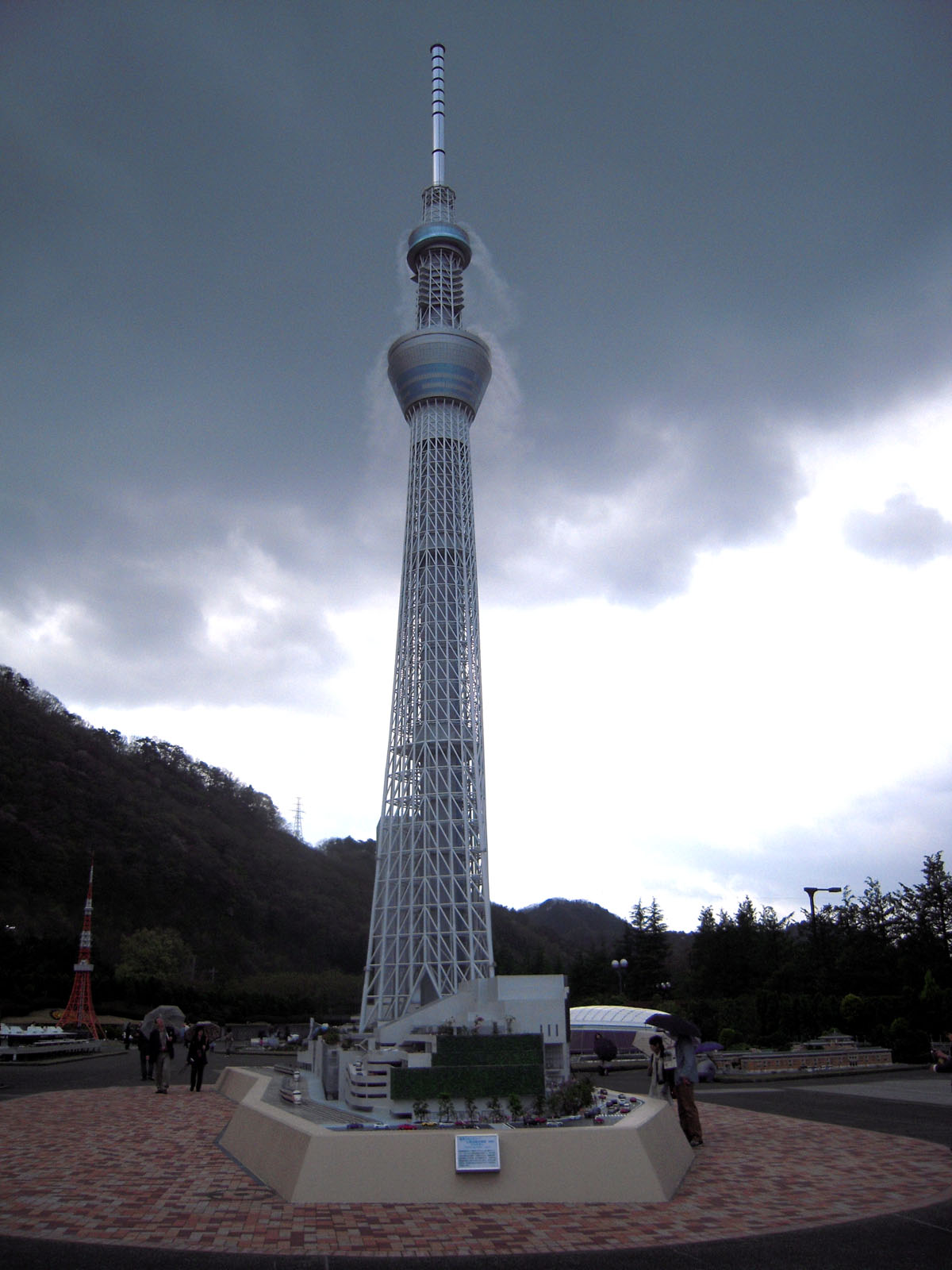
| Replica of Tokyo Sky Tree at Tobu World Square |
Tobu World Square.
If you're from the Philippines and old enough, you've probably been to the Nayong Pilipino Park near Ninoy Aquino International Airport Terminal 2, where they recreated almost all of the Philippines' natural wonders. If Nayong Pilipino was to the Philippines, Tobu World Square is to the world. Almost.
There are 1/25 scale replicas of different wonders from around the world, old and new, like Ankor Wat, the Pyramids of Egypt, the Parthenon, the Statue of Liberty, the Tokyo Tower, the Eiffel Tower, the White House, even the (old) World Trade Center's twin towers, La Sagrada Familia, the Great Wall of China, the Taj Mahal, and much more.
The full list of replicas is here: http://adf.ly/8V4fc
Check out the photos in this interactive webpage: http://adf.ly/8V4Zs
The home page in English is here: http://adf.ly/8V4UK
Admission is only JPY 2,500 for junior high school students (12-year-olds?) and older, JPY 1,200 for ages 4 to 12. There are discounts for groups and persons with disabilities.
06 June 2012
03 June 2012
Cup Noodles Museum
On the topic of
food,
not-so-known,
travels,
videos
Comes with a bonus footage of Minato Mirai at dusk.
02 June 2012
30 May 2012
Sankeien Garden, Yokohama
On the topic of
not-so-known,
travels,
videos
If the University of the Philippines' Diliman Campus has a "Sunken Garden," Yokohama, Japan has "Sankeien Garden." It would have probably been best to come here during fall or during sakura season. We didn't have time though to go around the whole place because we were still going somewhere that might be closing early (see the next episode's video). Entrance fee: 500 yen.
26 May 2012
Odawara-Hakone-Gotemba-Fuji
I had a couple of friends visit over from Singapore and the original plan was to visit Hakone to get a good view of Mt. Fuji. We bought the Hakone Free Pass so that we can go around the Hakone area freely.
We first made a pitstop though at the Odawara Castle. And then we went on the Hakone Sightseeing Cruise on Lake Ashi (also known as Hakone Lake), the Hakone Ropeway (i.e. cable car / cable-suspended gondolas similar to the one connecting mainland Singapore and Sentosa), and Hakone Tozan Cable Car (i.e. train being pulled by cables, like San Francisco's cable cars or the Peak Tram going to Victoria Peak in Hong Kong).
Finally, we went out of our way to the Gotemba Premium Outlets in Gotemba, only to find the best views of Fuji-san for this day trip. From Gotemba Premium Outlets, it took us 3.5 hours to get home inclusive of all the waiting for the infrequent night time trains. Had I known earlier, we could've gotten home an hour and a half earlier if only we had spent around 500 yen more each and used a different route. But anyway, we had a blast.
22 May 2012
Sanja Matsuri (Three Temples Festival), Asakusa, Tokyo
On the topic of
not-so-known,
travels,
videos
I went to Asakusa in Tokyo to meet some friends, and what do you know, there was a festival going on! I looked it up and apparently it's called the Sanja Matsuri (literally Three Temples Festival). Incidentally, it is three days long, starting on a Friday and ending on the 3rd Sunday of May. They say this is one of the most attended festivals attracting over 1 million locals and tourists over its three-day course.
NOTE: The video was "enhanced" using tools provided by YouTube.
20 May 2012
How to Cook Ramen
Check out this article from MustLoveJapan.com about how to cook ramen. I've always only eaten ramen that has been prepared in restaurants, cafeteria, or instantly. I wonder how it is to actually make ramen at home.
By the way, new Nihongo word for you: "Tonkotsu." Pork bone broth. Yummy.
13 May 2012
Japanese researchers invent "Shiri" robot
| Image from Express Chemist. |
Talking about "Shiri," here are some Japan-related tidbits that might be interesting:
1. "Shiri" is usually prefixed by "o" as in "oshiri," or as in "ocha" where "cha" means tea, or "ofuro" were "furo" means bath tub, or "okane" where "kane" means money, and so on. I think people would say the "o" makes it more polite, but I don't know if that makes sense.
2. When Apple introduced the iPhone 4S with its voice-controlled assistant feature named "Siri," Japanese tweeters were laughing all around Twitter about it having a name that means buttocks. In Japanese pronunciation, they do not have a "si" sound, instead they use "shi," and thus "Siri" is pronounced like "Shiri" in Japanese, just as they say "Ey Bee She" for "A, B, C."
3. I don't know what the Roswell sci-fi TV series actress portraying the character Liz Parker, Shiri Appleby, would say about all this.
06 May 2012
Why "Japan! Japan!"?
![]() |
| Japan, Japan: natural and cultural wonders |
Some of you probably wondered, why "Japan! Japan!" for a blog name. Well it's three things.
First, before I embarked on my (2nd) journey here in Japan, that's how my very good friends wished me well. They greeted me "Japan! Japan!" And by Japan, they actually meant J.A.P.A.N. - Just Always Pray At Night.
Secondly, it was my second sojourn in Japan, so it wasn't gonna be just a simple Japan blog like last time that was easily (attempted to be) copied by other people months later. So this time around, it was going to be a Japan! Japan! blog. While in my Japan 2005 blog, I was a little bit "diplomatic," as where the people I met were, since I was only a visitor for two months, in the current "Japan! Japan!" blog series, I'm in a more hostile situation and so I have had to be a little bit more fierce, like that dragon in the photo accompanying this article.
Thirdly, it's catchy and unique. I haven't found other Japan-related blogs named like so. I've so far only found one movie entitled "Japan Japan" - note the absence of exclamation points - which I strongly don't recommend to watch, by the way. It is an indie film but it would probably be a for-Adults-only movie. And then there's this Vimeo also entitled "Japan Japan," showing a video of a couple singing a song because they ♥ Japan.
I could think of a number of other justifications and what not for "Japan! Japan!," but you know what, those three are my only real reasons. And actually, I did not name it "Japan! Japan!" until after I started video blogging and some nut already got japanjapan.blogspot.com. But that's not as cool as japan.ronjie.com because I can tell my friends or put in my videos something like, "Visit Japan! ...dot ronjie dot com." :-D
30 April 2012
How Nihongo has given birth to new languages, and the case of the missing Beef Misono, Chicken Teriyaki, and Torikatsu
Read this interesting article from Tofugu, entitled "How Japanese gives birth to new languages," via this (ad-supported) link: http://j.gs/uxx. That article reminded me of the most popular "Japanese" fast-food chain in the Philippines, Tokyo Tokyo, and their Beef Misono (and now, even Tuna Misono).
19 April 2012
Stats Update
On the topic of
announcements,
stats
2 years in and here are The Japan! Japan! Blog updated stats.
I'm nearly at 6,000 pageviews for 266 posts (inclusive of 53 posts from my Japan blog version 1.0 from 2005, and of pageviews of those 53 posts since I copied them here). That's an average of more than 20 pageviews per post. Not bad.
My top article is my "Welcome to Japan (Part 1)" post, which has had 237 pageviews. The other members of my top 5 articles are:
In terms of countries where my audience comes from, this is more or less the breakdown:
I'm nearly at 6,000 pageviews for 266 posts (inclusive of 53 posts from my Japan blog version 1.0 from 2005, and of pageviews of those 53 posts since I copied them here). That's an average of more than 20 pageviews per post. Not bad.
My top article is my "Welcome to Japan (Part 1)" post, which has had 237 pageviews. The other members of my top 5 articles are:
- "Filipino restaurants in Atsugi!" 120 Pageviews
- "Upo, green papaya, and sayote alternatives in Japan" 107 Pageviews
- "Pinoy Restaurants in and around Tokyo" 56 Pageviews
- "Welcome to Japan (Part 2)" 56 Pageviews
I think those articles are appropriately my top 5. Interesting though is that, while the "Welcome to Japan" series is understandably in the top 5, the other three posts are about food. It's just past lunch and I feel hungry again. Hmmm, this reminds me though that I should update the restaurants list in Atsugi, and Tokyo, respectively because some of these restaurants do not exist anymore.
Anyway, my number 1 traffic source is Google Search. Interestingly, I found out that when you do a Yahoo! search for "Sayote in Japan," my blog article "Upo, green papaya, and sayote alternatives in Japan" is the number one search result, while in a Google search it is only the third result.
| Pageviews by Countries as of 19 April 2012. Courtesy of Blogger. |
- United States 2,162
- Japan 1,294
- Philippines 505
- Germany 272
- Netherlands 172
- Russia 153
- United Kingdom 106
- Ukraine 93
- Canada 47
- France 44
- Others 1,070
It's very interesting that my blog has had the most visits from the US, and visits from the Philippines only rank 3rd, considering that my expected audience are Filipinos coming to Japan. But then, there are many Filipinos in the US, and maybe most of my traffic from the US are from Filipino-Americans. Or my Filipino-American relatives. Or, I would think there are many Americans who are very much interested in Japan, Japanese culture, and travelling to Japan, and they see my blog and look at it as a blog in English by a foreigner in Japan, and so they can relate. What surprised me the most though was the many visits from European countries. Of course, English might be spoken and understood in those European countries more than in other countries and it helps that my blog is in English. I did meet one German national who stayed in Japan for a few months as well, and I did visit the Netherlands for a week on official business, but I'm not sure if those two things have anything to do with the (small) traffic from those countries. Finally, the list also shows that, no, I'm not the only one visiting my own blog regularly just to increase my pageviews because I haven't been to the US nor use US-based proxy servers to look at my own blog. Haha. I've actually disabled that (i.e. counting of my pageviews in the stats), of course. But I guess Japan as a traffic source coming in as #2 and not #3 or lower is not much of a surprise. Anyway, these are very important stats, readily accessible through Blogger, and they give me good insights as to what things I can do to better improve and tailor my blog to my actual audience.
[I checked just now: back in September 2010, I only had around 180 pageviews and my audience came from only 7 countries. And back in May 2011, I also had similar stats as today, except of course I had much less pageviews. I also think that having a video blog on YouTube, and cross-posting on Facebook, Twitter, and occasionally Google Plus, provides a ton of additional exposure for this blog. Great!]
[I checked just now: back in September 2010, I only had around 180 pageviews and my audience came from only 7 countries. And back in May 2011, I also had similar stats as today, except of course I had much less pageviews. I also think that having a video blog on YouTube, and cross-posting on Facebook, Twitter, and occasionally Google Plus, provides a ton of additional exposure for this blog. Great!]
Finally, it is also very interesting that I still have more visitors using Internet Explorer instead of Chrome. That has a ton of implications behind it. And, nearly a quarter of my visitors are using Macintosh computers and around 8% are on mobile devices. Very interesting.
| Pageviews by Operating Systems as of 19 April 2012. Courtesy of Blogger. |
| Pageviews by Browsers as of 19 April 2012. Courtesy of Blogger. |
Once again, どうもありがとうございます to one and all.
16 April 2012
Arigatou
On the topic of
nihongo
ありがとう (Hiragana)Apparently the first Kanji means "possession" and the second one means "difficulty," and combined it becomes "in trouble" (in Chinese) or "grateful" (in Japanese) and is actually pronounced something like "yuunan" or "arigata." The う is Hiragana obviously, not a Kanji character, and instead it is placed to make sure the "arigata" is pronounced as "arigatou." This is just my speculation but I think "arigatou" might be short for "arigata wo," that together with "gozaimasu" literally means "There is gratitude" or "Gratitude exists." In any case, you'll probably see "arigatou" in Kanji in very limited instances, and if it would be written in Kanji, it would be in a situation where politeness is necessitated and you would usually see it with "gozaimasu," which generally turns greetings into polite form, like "ohayou gozaimasu" (good morning), and so on:
有難う (Kanji)
有難うございますTo all readers of The Japan! Japan! Blog as well as viewers of The Japan! Japan! Video Blog, and to all the people I've met in Japan who has made my stay here so far a very enjoyable experience, どうもありがとうございます / Dōmo arigatōgozaimasu / Thank you very much po. ("Po" being the Filipino equivalent of "gozaimasu," in terms of turning an ordinary sentence into polite form.)
14 April 2012
Sakura Hanami in Chidorigafuchi
The Japan! Japan! Video Blog Episode #36 features our videos from our trip from Atsugi to Chidorigafuchi in Tokyo for some cherry blossom (sakura) viewing (hanami). It's over an hour long, because the cherry trees are just so nice to look at, plus there's just so many of them. If you want you can skip over the "intro" which features some along-the-train-route sights of Tokyo, and start at around the 10:30 mark to see sakura already. We also dropped by the Nippon Budoukan and the Yasukuni Shrine.
10 April 2012
Check out Culture Japan
I think I've previously linked already to Danny Choo's website (www.dannychoo.com) which features some interesting and well-produced content on Japanese culture. He's done a number of videos on Japanese culture as well, encapsulated in the series aptly called "Culture Japan." These videos have even been featured on Tokyo MX TV in Japan, across the whole of Asia on the Animax Network and across America on Mnet America. Here's the official trailer for the just-concluded Season 1 of Culture Japan:
While this is a full-length (more than 1 hour) digest of Season 1:
To watch more Culture Japan videos, including the Season 2 trailer, check out their YouTube channel:
http://www.youtube.com/user/tokyostormtrooper/featured
While this is a full-length (more than 1 hour) digest of Season 1:
To watch more Culture Japan videos, including the Season 2 trailer, check out their YouTube channel:
http://www.youtube.com/user/tokyostormtrooper/featured
09 April 2012
Hanami in Zama
In the Japan! Japan! Video Blog Episode #35, we feature my first sakura hanami (cherry blossom viewing) experience at the Camp Zama base in Zama, Kanagawa, Japan. I just discovered that "Karupasu" (Calpas?) Russian sausage thing! Know any place where I can snag some of those?
For the stabilized version of the video, click this link: http://youtu.be/6Q7cKtkoerQ
23 March 2012
The fastest and cheapest way to remit money to the Philippines from Japan [Updated]
On the topic of
filipinos,
philippines
This post was formerly titled: "I (heart) www.GCASH.jp!!!"
Oh, the difficulties of having to pay bills at home while you're based in a very foreign land. I have told you guys about GCASH.JP through an earlier, short blog post, but man, o man, it is only now I've dipped my hands in it and it's like… holy water! (For you pundits out there: I said it's only like holy water; it is of course nothing like real holy water.) But it is truly a miracle, a real blessing from Up Above. Amen.
Long story short, I have some cash in my bank account here in Japan, and I needed to remit some to my bank account in Manila. How long did it take using GCASH? About an hour, and all from the comfort of my own home. How much did it cost? It cost me around 3.25% of my remittance amount1. That's very cheap! And very fast. Now that's what you call a wire transfer! I ♥ GCASH.JP!!!
Contrast all that now with the time when I transferred using my Japan-based bank's over-the-counter remittance services for the same amount of remittance applied at the same time of the day (nearly 3pm): roughly 1 banking day, and 11.6% of my remittance amount1! That's more than 3 times the cost!
Okay, the length of time it takes is not really a good point for comparison. I had internet banking set-up for my Japan bank account, and so that helped hasten things up. Plus, I also had to pre-register on to GCASH. Now, to go to my bank branch, I had to actually spend at most around 220 pesos for my roundtrip bus fare and 40 extra minutes for the trip. It was just before 3pm when I got to the bank, and we were told that the transfer might not be made until the next banking day. Otherwise, maybe it could have been just as fast, save for the 40 minutes to travel to our bank branch.
Enter the internet banking facilities of my bank. What actually happens is I first transfer to a pre-assigned local Japanese bank account associated with my GCASH account. I just do it online from the comfort of my own home, no need to pre-enroll my transferees' accounts (unlike BPI, but I heard China Bank and a few other banks allow you to make funds transfer within the Philippines without pre-enrolling as well).
In under 10 minutes, the funds from my Japan bank account is already in my GCASH account. And then in around 30 minutes or so, the funds from my GCASH account are already in my Philippines-based bank account.
I should also mention though that the 3.25% tax for remittance via GCASH is because I have a coupon, given to new GCASH members, expiring by the end of March. If without the coupon I would have paid around maybe 4%, which is still not so bad, and still nearly 3 times less the cost for transferring bank-to-bank, Japan-to-Philippines.
I should also mention that GCASH's Customer Support Staff are a delight. I interacted with an English-speaking Japanese via e-mail, and then later I got a call from a Tagalog-speaking Filipina who was very polite and very helpful (although she did not really have the answers to my issue that time). Speaking about my issue, I was on GCASH's English website and my bank's is in Japanese, so there was a little bit of a disconnect there even though I could use Google's translation functions, and that led to my problem but I eventually figured it all out. Thanks also to Google!
My local Japanese bank, by the way, is Sumitomo Mitsui Banking Corporation. I would think that services offered through other Japanese banks are on the same level. Being in a city far away from Tokyo, my local branch does not have people who can speak English so that was a difficulty. Just by using the online banking facilities and Google Chrome as web browser, it didn't matter as much that the website is in Japanese.
1 Relative to the exchange rate based on historical rates shown on www.exchange-rates.org.
2 [UPDATE/ADDENDUM] They sort of advertise that you can transfer to PNB and MetroBank bank accounts, and it gives you the impression that you would need to have an account at only those two banks. But the truth is, you can transfer to probably all Bancnet member banks. But there are some additional requirements for certain banks (I forgot which ones though), and you'll be informed of those requirements as you use the service. Anyways, the one big question we have is: This is somewhat a service of Globe - an Ayala company - and yet why does it seem impossible to transfer to BPI - another Ayala company!? That is so weird. But anyway, in the experience I recounted in this blog post, we transferred to ChinaBank. Tell us in the comments how different your experience might be if you had used other banks, or if you had used ChinaBank as well.
Oh, the difficulties of having to pay bills at home while you're based in a very foreign land. I have told you guys about GCASH.JP through an earlier, short blog post, but man, o man, it is only now I've dipped my hands in it and it's like… holy water! (For you pundits out there: I said it's only like holy water; it is of course nothing like real holy water.) But it is truly a miracle, a real blessing from Up Above. Amen.
Long story short, I have some cash in my bank account here in Japan, and I needed to remit some to my bank account in Manila. How long did it take using GCASH? About an hour, and all from the comfort of my own home. How much did it cost? It cost me around 3.25% of my remittance amount1. That's very cheap! And very fast. Now that's what you call a wire transfer! I ♥ GCASH.JP!!!
Contrast all that now with the time when I transferred using my Japan-based bank's over-the-counter remittance services for the same amount of remittance applied at the same time of the day (nearly 3pm): roughly 1 banking day, and 11.6% of my remittance amount1! That's more than 3 times the cost!
Okay, the length of time it takes is not really a good point for comparison. I had internet banking set-up for my Japan bank account, and so that helped hasten things up. Plus, I also had to pre-register on to GCASH. Now, to go to my bank branch, I had to actually spend at most around 220 pesos for my roundtrip bus fare and 40 extra minutes for the trip. It was just before 3pm when I got to the bank, and we were told that the transfer might not be made until the next banking day. Otherwise, maybe it could have been just as fast, save for the 40 minutes to travel to our bank branch.
Enter the internet banking facilities of my bank. What actually happens is I first transfer to a pre-assigned local Japanese bank account associated with my GCASH account. I just do it online from the comfort of my own home, no need to pre-enroll my transferees' accounts (unlike BPI, but I heard China Bank and a few other banks allow you to make funds transfer within the Philippines without pre-enrolling as well).
In under 10 minutes, the funds from my Japan bank account is already in my GCASH account. And then in around 30 minutes or so, the funds from my GCASH account are already in my Philippines-based bank account.
I should also mention though that the 3.25% tax for remittance via GCASH is because I have a coupon, given to new GCASH members, expiring by the end of March. If without the coupon I would have paid around maybe 4%, which is still not so bad, and still nearly 3 times less the cost for transferring bank-to-bank, Japan-to-Philippines.
I should also mention that GCASH's Customer Support Staff are a delight. I interacted with an English-speaking Japanese via e-mail, and then later I got a call from a Tagalog-speaking Filipina who was very polite and very helpful (although she did not really have the answers to my issue that time). Speaking about my issue, I was on GCASH's English website and my bank's is in Japanese, so there was a little bit of a disconnect there even though I could use Google's translation functions, and that led to my problem but I eventually figured it all out. Thanks also to Google!
My local Japanese bank, by the way, is Sumitomo Mitsui Banking Corporation. I would think that services offered through other Japanese banks are on the same level. Being in a city far away from Tokyo, my local branch does not have people who can speak English so that was a difficulty. Just by using the online banking facilities and Google Chrome as web browser, it didn't matter as much that the website is in Japanese.
GCASH, by the way, is a service by Softbank Payment Services here in Japan, and "guaranteed" by Globe (yes, the cellphone company) in the Philippines. You can do a bank transfer to over 15 other banks in the Philippines, including Citibank, Chinabank, PNB, and MetroBank2. You can also transfer to someone's GCASH account in the Philippines as "Mobile Money" - they can use it as prepaid cellphone load, and a number of other things, but I think it might be difficult to "withdraw" the cash. The remit-to-GCASH-in-the-Philippines option I believe has even cheaper rates. You can also remit to selected remittance centers in the Philippines, like Globe Stores, some pawnshops, and some banks. I can also actually transfer to my GCASH.JP account through convenience stores, but that costs a little bit more and the nearest one is about a 5-minute walk away.
2 [UPDATE/ADDENDUM] They sort of advertise that you can transfer to PNB and MetroBank bank accounts, and it gives you the impression that you would need to have an account at only those two banks. But the truth is, you can transfer to probably all Bancnet member banks. But there are some additional requirements for certain banks (I forgot which ones though), and you'll be informed of those requirements as you use the service. Anyways, the one big question we have is: This is somewhat a service of Globe - an Ayala company - and yet why does it seem impossible to transfer to BPI - another Ayala company!? That is so weird. But anyway, in the experience I recounted in this blog post, we transferred to ChinaBank. Tell us in the comments how different your experience might be if you had used other banks, or if you had used ChinaBank as well.
20 March 2012
5-Thirsty in Japan?
On the topic of
cultures,
japan,
philippines
In the Philippines, one of the beer companies featured a TV commercial which introduced the concept of "5-Thirsty," i.e. at 5:30pm, after work hours, it's time to invite friends and drink... beer, of course.
Anyway, here in Japan, I've noticed something happening at around 5:30pm as well. And no, it's actually not a 5-Thirsty thing. I've noticed it for a long time now, but it is only today that I paid attention.
It's two things.
Firstly, there are PA ("public address," in case you didn't know) systems in all neighborhoods here in Japan. It has many benefits, obviously, like when there's some impending disaster like a tornado or tsunami or fire and so on, or some message from the local government (and maybe national government?) needs to be disseminated fast.
But, they play chime tunes as well on those PA systems. Like, if I'm not mistaken, at 12 noon, they play a chime to signal 12 noon. Maybe it is to signal lunch break.
In schools, at the start and at the end of every class, or at the start and at the end of public announcements from the school administration as well, there's a chime that plays, that I believe is usually the same sound as the Big Ben's chime.
15 minutes or less before closing time, stores usually play an Auld Lang Syne chime right before announcing closing time.
Today, at exactly 5pm, there's this chime that played again for the Nth time now since I've been here in Japan. I did some search and apparently it's called "the Chime of Love," and the tune is from a song / nursery rhyme entitled "Yuyake Koyake," which I believe literally translates to Sunset Burning. If you haven't guessed yet, it is to signal the sunset and it is meant to inform children, for their own safety, that it is time to go home.
Here's a video capturing the Yuyake Koyake "chime of love" moment during summertime at one rather urban neighborhood in Japan: http://youtu.be/18-YzchO6xs
And here's a video of someone playing a more complex version of the tune on piano: http://youtu.be/k3rtMAr79AQ
I asked a Japanese friend and, considering the different sunset times per season here, he informed me that Yuyake Koyake does not usually play at 5pm. Here are the play times, at least here in Atsugi, Kanagawa:
March, April - 5pm
May to August - 5:30pm
September, October - 5pm
November to February - 4:30pm
For more information, I found this explanation (and another recording of an actual Yuyake Koyake "chime of love" at another neighborhood here in Japan) which might be interesting to you as well: http://youtu.be/Iez63nk6J6w
16 March 2012
Graduation time!
Not for me, though. Not yet. But for many students, March is graduation month. I went to Tokyo today and I noticed a lot of women - mostly younger women - in what I thought was "traditional" Japanese kimono. The first thought was, maybe it was their graduation attire. Anyway, I asked a Japanese friend and I was half right. It was graduation attire but it was not "traditional" Japanese kimono like this:
(Image taken from http://www.1carat.jp/images/kasou/kimono/kimono_img.jpg)
Instead, what I saw were actually called hakama, and they look like this:
(Image taken from http://en.wikipedia.org/wiki/Hakama)
My friend added that these clothing styles are obviously very different from Korean traditional attire which looks like this:
(Image taken from http://blogimg.goo.ne.jp/user_image/03/c3/684b1b938b472ffdce5e613af44a3080.jpg)
Anyways, I googled "hakama" up and found that at least one definition says the hakama is also a traditional Japanese attire. My friend clarified though that it is not as mainstream as the more traditional kimono.
11 March 2012
Remembering 3-11
It's been a year since the Great East Japan Earthquake of March 11, 2011. What an experience that was. Anyways, check out this very interesting visualization (i.e. a dynamic infographic) of the earthquakes in Japan (M3.0 or stronger) in 2011: http://youtu.be/eKp5cA2sM28. For contrast, check out this version for earthquakes (M4.5 or stronger) in the whole world in 2011: http://youtu.be/cwWn_W6ZbT4. These were featured on LikeCOOL. Finally, let's try to remember 3-11 through this well-prepared news video from ABC's 20/20 show from a year ago, that I saw just now: http://youtu.be/9nTlgtf7TME.
28 February 2012
Easily send money from Japan to the Philippines at some of the lowest rates
It's actually powered by Softbank Payment Service. Check out http://www.gcash.jp. The website can switch between English and Nihongo.
26 February 2012
Kamakura! (Video Update)
About a month ago, I posted my video of our visit to Kamakura. When I was editing the video, I wondered where this certain clip went. I thought I lost it forever, but well, here it is!
03 February 2012
Rural Atsugi
On the topic of
around atsugi,
international students,
travels,
videos
Our professor invited us to a walk around school - a rural area of Atsugi, with plenty of farm land, hills, and all that - and 20 of us went along. We walked for an hour and twenty minutes under a generally sunny winter day. The video below is a 10-minute, super-fast-forward version (8x speed) of the original.
31 January 2012
18 January 2012
How to Deal With Slow Walkers
While you're at it, go read the comments on the YouTube page as well, will ya? :D
17 January 2012
A couple more websites about Japan
Check out Tofugu.com for more Japan-related reading (and watching), written and produced by a few young dudes who love Japan and Nihongo, and have had experience living or travelling in Japan.
From Tofugu, I discovered WhatJapanThinks.com - a collection of interesting tidbits on how Japan thinks based on surveys of actual Japanese people in Japan. On WhatJapanThinks.com, there are a few more links to websites about Japan, but I haven't really checked any of them out.
06 January 2012
Kotoshimo Yoroshiku!
It's another new year, and I wish you all a happy new year yet again. And with the new year, comes, for the 3rd time, McDonald's Japan's "Big America" burgers!
I certainly didn't get enough of 2011's Big America 2 campaign; I was only able to try the Idaho (with a hash brown patty! yum!) and the Miami (with tortilla chips and taco-seasoned beef! yummmm!) burgers. I wasn't able to try the Manhattan and the Texas 2 burgers.
This time, McDonald's Japan will feature the Grand Canyon, the Las Vegas, the Broadway, and the Beverly Hills burgers. Naming-wise, it's a departure from the years past where only state or city names were used. But, I hope this time they won't disappoint.
As of the time of this writing, the Grand Canyon burger is said to be now available. It is said to give you a 700-calorie punch. That's on top of the calories from the fries and Coke you'll order with it, although of course, please remember that a large Coke in Japan is just a small/regular size in the US. I'm on my way to get one now. Well, I'll tell you all about it when I survive it.
From http://www.ibtimes.com/articles/277300/20120105/big-america-burger-2012-mcdonald-s-timeline.htm,
The Las Vegas Burger will be released at the end of January, followed by the Broadway Burger in mid-February and the Beverly Hills Burger in early March.For photos, visit http://www.mcdonalds.co.jp/beef/bigamerica/index.html. Hmmm. I think I'll like last year's line up better. Let's see.
23 December 2011
Christmas :-D
Christmas+greetings by ronjieaquino, a GoAnimate.com video e-card
Like it? Create your own at GoAnimate.com. It's free and fun!
22 September 2011
[cross-post] Cafe au Lait!
NOTE: This is a cross-post from the RONJ-BLOG where I wondered what was the difference between cafe au lait and cafe latte.
I probably first encountered the term latte upon the advent of a certain "coffee drink restaurant" called Starbucks, ca. 1998, in Manila. Probably not because of that "coffee drink restaurant" per se, but nonetheless that was one event I can associate with our eyes being opened back then to coffee other than Nescafe and Folgers and some other instant coffee brands from the US that balikbayans brought back home. Of course at that time, coffee shops like The Coffee Beanery from the Cravings Group helped Starbuko to somewhat co-educate us as well.
Anyway, it was obvious what latte was from the sound, probably because of us Filipinos having a bit of English and Spanish language backgrounds, and being attached to cafe. Latte sounded like leche, maybe? Obvious to us also was that the lattes had espresso and so on, which some people likewise did not hear of before (I remember back in around 2005 a friend ordered espresso - as in one shot - and then throwing it away after one sip). Of course, these coffee shops mostly had espresso-based drinks.
And then I came to live for 3 years in Japan. I then first encountered the term cafe au lait and again lait, from its sound, obviously means milk. Au probably means and? At first I also thought that au lait was pronounced oh laht. But then, I'd see some Japanese labels that read something like kafe oreh. I also thought at first that the Japanese were just referring to cafe latte in their fancy Japanese English as Cafe Olé, just as they call Asia Ahjiah instead of Ehshia, and cabbage kyabets instead of kabej, and sometimes hamburger as just simply hambahg. But okay, yeah, it's actually cafe au lait (pronounced like Olé). So all this time, I've been buying cafe au lait.
Anyway, so yeah I thought cafe au lait and cafe latte was the same, whereas the former was the norm here. And then I found two kinds of Nescafe (of all things!) at the supermarket: a cafe au lait and a cafe latte! So only then it became obvious to me that those two have some differences. I found the latte better suited my taste though. And so I got curious. Then, I googled it up. From CoffeeAndTeaTime.com:
By the way, by definition, both au lait and latte don't usually come with sugar. But here, everything does. Just like in the Philippines. But even the corn flakes (they're always frosted or flavored)! But no, unlike the Philippines, cold tea drinks aren't normally sweetened.
I probably first encountered the term latte upon the advent of a certain "coffee drink restaurant" called Starbucks, ca. 1998, in Manila. Probably not because of that "coffee drink restaurant" per se, but nonetheless that was one event I can associate with our eyes being opened back then to coffee other than Nescafe and Folgers and some other instant coffee brands from the US that balikbayans brought back home. Of course at that time, coffee shops like The Coffee Beanery from the Cravings Group helped Starbuko to somewhat co-educate us as well.
Anyway, it was obvious what latte was from the sound, probably because of us Filipinos having a bit of English and Spanish language backgrounds, and being attached to cafe. Latte sounded like leche, maybe? Obvious to us also was that the lattes had espresso and so on, which some people likewise did not hear of before (I remember back in around 2005 a friend ordered espresso - as in one shot - and then throwing it away after one sip). Of course, these coffee shops mostly had espresso-based drinks.
And then I came to live for 3 years in Japan. I then first encountered the term cafe au lait and again lait, from its sound, obviously means milk. Au probably means and? At first I also thought that au lait was pronounced oh laht. But then, I'd see some Japanese labels that read something like kafe oreh. I also thought at first that the Japanese were just referring to cafe latte in their fancy Japanese English as Cafe Olé, just as they call Asia Ahjiah instead of Ehshia, and cabbage kyabets instead of kabej, and sometimes hamburger as just simply hambahg. But okay, yeah, it's actually cafe au lait (pronounced like Olé). So all this time, I've been buying cafe au lait.
Anyway, so yeah I thought cafe au lait and cafe latte was the same, whereas the former was the norm here. And then I found two kinds of Nescafe (of all things!) at the supermarket: a cafe au lait and a cafe latte! So only then it became obvious to me that those two have some differences. I found the latte better suited my taste though. And so I got curious. Then, I googled it up. From CoffeeAndTeaTime.com:
"Cafe au Lait and Cafe Latte are indeed different. Cafe au lait is actually equal parts of regular coffee and hot milk. A cafe latte is made with 1/3 espresso and 2/3’s hot steamed milk. A cafe latte generally does not have a milk froth top. Sugar is generally not added to a caffe latte but those who prefer sweetened coffee will often add it to cafe au lait."There you have it. So I'm a cafe latte guy, but with a little hint of sugar, please.
By the way, by definition, both au lait and latte don't usually come with sugar. But here, everything does. Just like in the Philippines. But even the corn flakes (they're always frosted or flavored)! But no, unlike the Philippines, cold tea drinks aren't normally sweetened.
19 September 2011
[cross-post] Upo, green papaya, and sayote alternatives in Japan
NOTE: This is a cross-post from the RONJ-BLOG where I wondered what upo is in English.
I'm talking about the vegetable, the one which we usually sauté (yung kadalasang ginigisa natin) or that we can use as substitute for green papaya or sayote in a tinola dish.
You will never believe this.
You will never, ever, ever believe this.
It is...
I'm talking about the vegetable, the one which we usually sauté (yung kadalasang ginigisa natin) or that we can use as substitute for green papaya or sayote in a tinola dish.
You will never believe this.
You will never, ever, ever believe this.
It is...
07 September 2011
05 September 2011
Hulu is now in Japan!
Hulu, the TV show and movie online streaming service, is now available in Japan! Currently, they have tons of free-to-watch content, plus they are offering a 1-month free trial. Their interface is available in both Japanese and English. They have plans to offer Japanese content in the future. Visit Hulu.jp now. :-)
31 August 2011
Recent Japanese Inventions
Watch this podcast video from CNET TV. You know, when Sony invented the Betamax, everyone went the way of the VHS.
29 August 2011
Video Backlog 3
On the topic of
videos
The famous Shibuya Crossing, from the Ground:
My "Hikkoshi," moving to a new apartment:
We celebrate one of my Chinese colleagues' birthday:
My "Hikkoshi," moving to a new apartment:
We celebrate one of my Chinese colleagues' birthday:
19 August 2011
Video Backlog 2
On the topic of
videos
Here's the second batch of videos. The titles are: "Chili Dog Rice," "Chips and Salsa," and "MacArthur Garage - Live Jazz Music (Two-Part Episode)"
15 August 2011
Video Blog Backlog
On the topic of
videos
Here's the first batch of my video blog episodes I was able to upload only recently. The titles of these are... "Snow Again!," "Sinigang sa Miso," and "McDonald's Miami Burger." Yum.
18 July 2011
Human Rights Abuse by Robots in Japan
I am human and I have the right to know.
(...why a certain legal procedure is being carried out on me.)
We all know about Japan's stand on whaling. Have you guys seen that movie, The Cove? When you come to Japan, expect the same kind of "hospitality." Not from everyone, of course. There are really nice people here. And then there are the few incomprehensible. And then there is their great love of country, that is above all else. Justice is difficult for murder victims of foreign nationality. Koreans were blamed for fire and for other things after the "Great" 1923 Tokyo area (Kanto) earthquake. Many foreigners of various nationalities have been stopped in the street or visited in their homes, and "requested" for their Alien Registration ID and passport, without any due cause.
Anyway, I arrived from a trip to Amsterdam that was scheduled to arrive 11:40, but thankfully arrived an hour earlier. There's a bus ride from 11:40 that directly goes to the train station closest home, and so I thought I could catch that. No need to take the next bus at around 14:00, nor the 12:00 or 13:00 bus that goes to a train station a further 15 minutes away.
By 11:05 I was already at the customs - just one stop away before buying my bus ticket!
And then, the customs officer, a young man apparently still in his 20's, appeared to have looked at a list and then held my passport and told me that he needs to inspect my baggage.
Me, having nothing to hide, and having done nor brought nothing illegal, "cooperated." I've been inspected by customs officers before, like on a few of the times I visited the US, but those felt like random inspections and didn't last more than 5 minutes.
This time though, it took around 25 minutes. All my bags' every nook and cranny, as well as all my worn coats' pockets down to the insoles of my shoes were all thoroughly checked. After just a few minutes, I realized it wasn't gonna be just a regular, random, 5-minute inspection. I was suspected of something.
If there's one thing I hate so much, it's that being suspected of something that I didn't do nor have anything to do about. I was getting frustrated.
But at the same time, every time he was going to open a bag pocket, the customs officer asked me "politely," "Is it okay if I open this part?" Every time of course I said yes. "Yes, of course." I felt though that he was doing that so that later, if I formally complain, they would just say, "You agreed to the inspection." I felt though that if I said no, they would suspect me even more. What the hell was I supposed to do. Japanese politeness, eh? It is starting to feel superficial after this incident.
Before he started opening my bags, he pointed to some photos of drugs, first and asked, "Did you bring this?" DUH. I politely said "no." Why the hell would I???????????????????? See, yes or no, he would have inspected my bag anyway. Next he pointed to photos of what appears to be porn DVDs and the like and asked "How about this?" DUH. What the hell!!!!!!!
And then the last stage of the inspection, finally, was to inspect me. At that point I started to ask why I was being inspected. Did I do something wrong? Personally, all I wanted to know was how could I have avoided this from happening to me? Because I don't do these wrong or illegal things because I surely have a decent life and I surely would like to avoid these bothersome circumstances.
But surely this was no random inspection! I was being a victim here. And I felt like I really had no choice. I was a slave, and I had to "cooperate" with the master's wish. WTF.
The only answer he gave me was that "We only need your cooperation." It's the blackbox answer. If I try to pry some more, I think I will just expose how much they do not know or pretend to not know about communicating in English. In other words, they were saying "You are in our country, you follow our orders, bitch, or else." And, "it's difficult to explain." Now here I follow every rule, of course. I always do. I respect that this is not my country. But at the same time, I expect that, if I don't do anything wrong, I will be respected. Because I am a human being. And hey, I work hard. Just like they do. But I don't try to step on other people's toes. Most specially innocent toes.
To me, now almost 24 hours after, my questions are still unanswered? WTF?????
I have a few suspicions why - and I'm still not really sure which one is the answer:
One thing is for sure now. I am afraid of this country and what the few people robots here could do. It was something I never expected of Japan. Of all the things I would like to avoid, it is abuse, particularly of authority. And particularly by robots I cannot ever reason with. I am very afraid.
Addenda:
I had a "stash" of 10 chocolate bars - from the Netherlands, of course. When the inspector saw it, you know I really felt that the first thing that came to his mind was that those chocolates might have marijuana in it. "So, you like chocolates?," he suspectingly asked. I told the truth, of course, "No, not really." But I was like, duh! I was like thinking, unlike him, I'm not a robot and I have friends! And that it's "Omiyage." Souvenirs/gifts from the place that I visited for friends and family. Ah the disappointment on his face. He was not going to be a hero that day.
I told the story to some Japanese friends here - no, I don't have robots as friends; these are real human beings with feelings - and they suggested it might be a combination of #2 and #8, and maybe they won't say it to me directly but I think they think it's #1, #2, and #8. Okay. But still, I still don't know the real reasons why. I have the right to know, robots! But, how to argue, much alone converse with robots, that is the question.
My friends did suggest also though that I might have looked suspicious. Yup, that's how Japanese think. I think the ordinary "salaryman," the office worker and breadwinner of families, do not wear blue shirts because blue is for blue-collared workers. When it's March 20th, the Spring solstice, plenty of robots start wearing spring attire and ditch their winter apparel. That is, even if the temperatures are still the same as winter temperatures. Because it's spring already! And so on. I knew all this beforehand, and so actually I made sure I was wearing a long-sleeved polo (i.e. with a collar) and I shaved. Oh yeah, because you are usually thought of as a criminal if you have a beard or mustache on. But at the end of it all, I think it was just because of my face and skin color. It's dead obvious I'm not a member of the yellow race. Racism? Human rights abuse? Whatever it is, it is very insulting.
(...why a certain legal procedure is being carried out on me.)
We all know about Japan's stand on whaling. Have you guys seen that movie, The Cove? When you come to Japan, expect the same kind of "hospitality." Not from everyone, of course. There are really nice people here. And then there are the few incomprehensible. And then there is their great love of country, that is above all else. Justice is difficult for murder victims of foreign nationality. Koreans were blamed for fire and for other things after the "Great" 1923 Tokyo area (Kanto) earthquake. Many foreigners of various nationalities have been stopped in the street or visited in their homes, and "requested" for their Alien Registration ID and passport, without any due cause.
Anyway, I arrived from a trip to Amsterdam that was scheduled to arrive 11:40, but thankfully arrived an hour earlier. There's a bus ride from 11:40 that directly goes to the train station closest home, and so I thought I could catch that. No need to take the next bus at around 14:00, nor the 12:00 or 13:00 bus that goes to a train station a further 15 minutes away.
By 11:05 I was already at the customs - just one stop away before buying my bus ticket!
And then, the customs officer, a young man apparently still in his 20's, appeared to have looked at a list and then held my passport and told me that he needs to inspect my baggage.
Me, having nothing to hide, and having done nor brought nothing illegal, "cooperated." I've been inspected by customs officers before, like on a few of the times I visited the US, but those felt like random inspections and didn't last more than 5 minutes.
This time though, it took around 25 minutes. All my bags' every nook and cranny, as well as all my worn coats' pockets down to the insoles of my shoes were all thoroughly checked. After just a few minutes, I realized it wasn't gonna be just a regular, random, 5-minute inspection. I was suspected of something.
If there's one thing I hate so much, it's that being suspected of something that I didn't do nor have anything to do about. I was getting frustrated.
But at the same time, every time he was going to open a bag pocket, the customs officer asked me "politely," "Is it okay if I open this part?" Every time of course I said yes. "Yes, of course." I felt though that he was doing that so that later, if I formally complain, they would just say, "You agreed to the inspection." I felt though that if I said no, they would suspect me even more. What the hell was I supposed to do. Japanese politeness, eh? It is starting to feel superficial after this incident.
Before he started opening my bags, he pointed to some photos of drugs, first and asked, "Did you bring this?" DUH. I politely said "no." Why the hell would I???????????????????? See, yes or no, he would have inspected my bag anyway. Next he pointed to photos of what appears to be porn DVDs and the like and asked "How about this?" DUH. What the hell!!!!!!!
And then the last stage of the inspection, finally, was to inspect me. At that point I started to ask why I was being inspected. Did I do something wrong? Personally, all I wanted to know was how could I have avoided this from happening to me? Because I don't do these wrong or illegal things because I surely have a decent life and I surely would like to avoid these bothersome circumstances.
But surely this was no random inspection! I was being a victim here. And I felt like I really had no choice. I was a slave, and I had to "cooperate" with the master's wish. WTF.
The only answer he gave me was that "We only need your cooperation." It's the blackbox answer. If I try to pry some more, I think I will just expose how much they do not know or pretend to not know about communicating in English. In other words, they were saying "You are in our country, you follow our orders, bitch, or else." And, "it's difficult to explain." Now here I follow every rule, of course. I always do. I respect that this is not my country. But at the same time, I expect that, if I don't do anything wrong, I will be respected. Because I am a human being. And hey, I work hard. Just like they do. But I don't try to step on other people's toes. Most specially innocent toes.
To me, now almost 24 hours after, my questions are still unanswered? WTF?????
I have a few suspicions why - and I'm still not really sure which one is the answer:
- A few Filipinos before me have been caught (maybe recently?) bringing either illegal drugs or pornography into Japan. Me being a Filipino, I was, to a robot, automatically a suspect. Talk about the fallacy of generalization. Talk about artificial intelligence. Or lack there of.
- I came from Amsterdam where certain drugs (i.e. marijuana) and prostitution are legal, although it is not in almost all other places. So, the robot thinking was, because I'm not a goody-two-shoes, law-following (blindly) Japanese citizen, I must have went there to try marijuana and prostitution. And I was bringing the experience all back to Japan with me. Because I can't get that here. So I was thought of a junkie and a perv. This, after I explained that I was a student in Japan and that I was in Amsterdam for 8 days, to attend a conference and now I'm back. By the way, I was probably the only Filipino on this KLM flight from Amsterdam. They probably thought that KLM was not an airline a Filipino (or a student) can usually afford, and I must have gotten rich by selling drugs or porn. Oh and yeah, me being a Filipino, I was a suspect.
- The customs officer probably needed some actual, hands-on training in inspection. The safest person to practice on was me. Because I am a Filipino? "We only need your cooperation." That's the reason why????
- I forgot that I brought some "salaminis," small salami, and failed to declare it. So I was probably bringing drugs and porn and didn't declare it as well. Anyways, the robot saw my salaminis and didn't comment. I think he was really looking for drugs and porn. See #7.
- They have a thriving porn and sex-related industry here. Prostitution is legal for as long as there is no intercourse. If I had brought porn, these high money industries might have been affected. DUH!
- The robots need to meet some inspection quota. And I was the perfect one to do it on - it's just un-Japanese to suspect fellow Japanese of bad things. So they can do it only on me. Oh, and certainly, not the white people. There's a double standard here.
- The robots are not robots after all. They've seen too many hero movies though, and knew how good it felt to be the hero of the day. Me being a Filipino male, travelling by myself, to the land of pot and prostitutes, was going to make him the hero of the day. It was going to be a big bust! NOT.
- In a span of 15 months, I've been out of this country and back for four times already. Twice on business trip (to Korea once, and then this last one) and twice on a personal trip (to the Philippines). Maybe that was too much for them? For those who do not know, when you get a visa to work or study in Japan, it is only a single entry visa. If you want to be able to come back, you can either get a single or a multiple re-entry permit. The former costs 3000 yen and the latter only 6000 yen. So obviously I have the multiple re-entry permit. Could it be that they dislike people coming and re-entering Japan for more than two times? Because if I paid for every re-entry, I would have paid them 12000 yen already, not just 6000 yen! And now what, I need to go back home this October and then again in December. At the same time, I'm afraid now for my wife to travel by herself. She'll just get suspected as well. The first time she visited me here as a tourist at first, she was also suspected of maybe trying to find work and become an illegal alien here. It was a good thing she brought her company ID back then.
Smart people can tell when one person, a Filipino for example, is to be "suspected" or not. Robots would automatically assume if one Filipino can do it, everyone else is a suspect. FUCK YOU ROBOTS.
You know, at the very least, I wished I was given a reason why I was being inspected. I would have accepted any reason. "We only need your cooperation," is no reason. It's the same as "You slave, I master, you really have no choice." Or at least that I had been warned earlier (like at immigration check point?) that it would take long and at least given a seat. If this had happened in the US, I think I would've gotten a reason. "Sir, you are suspected of bringing drugs and porn." Or, "Sir, you brought meat products and didn't declare it. So now we suspect you might have brought other illegal things." I wouldn't mind. At least I know. And next time, I know better to be more careful. And in the US at least I could ask back, "Why would that be?" And I would be given another good answer. And then we could have a conversation. Because they have humans and not pre-programmed, protocol-friendly robots as customs officers there. They know that we, travellers, do-gooders or otherwise, are humans as well. Sometimes harsh, but sure, they are doing their job but usually harsh only for good reason. "We only need your cooperation." FUCK IT.
Addenda:
I had a "stash" of 10 chocolate bars - from the Netherlands, of course. When the inspector saw it, you know I really felt that the first thing that came to his mind was that those chocolates might have marijuana in it. "So, you like chocolates?," he suspectingly asked. I told the truth, of course, "No, not really." But I was like, duh! I was like thinking, unlike him, I'm not a robot and I have friends! And that it's "Omiyage." Souvenirs/gifts from the place that I visited for friends and family. Ah the disappointment on his face. He was not going to be a hero that day.
I told the story to some Japanese friends here - no, I don't have robots as friends; these are real human beings with feelings - and they suggested it might be a combination of #2 and #8, and maybe they won't say it to me directly but I think they think it's #1, #2, and #8. Okay. But still, I still don't know the real reasons why. I have the right to know, robots! But, how to argue, much alone converse with robots, that is the question.
My friends did suggest also though that I might have looked suspicious. Yup, that's how Japanese think. I think the ordinary "salaryman," the office worker and breadwinner of families, do not wear blue shirts because blue is for blue-collared workers. When it's March 20th, the Spring solstice, plenty of robots start wearing spring attire and ditch their winter apparel. That is, even if the temperatures are still the same as winter temperatures. Because it's spring already! And so on. I knew all this beforehand, and so actually I made sure I was wearing a long-sleeved polo (i.e. with a collar) and I shaved. Oh yeah, because you are usually thought of as a criminal if you have a beard or mustache on. But at the end of it all, I think it was just because of my face and skin color. It's dead obvious I'm not a member of the yellow race. Racism? Human rights abuse? Whatever it is, it is very insulting.
24 May 2011
carbonaramara
I will now really officially stop blogging here regularly.
That is, unless yet another new chapter in my life here in Japan begins anew. :-D If there would be one, it won't be until two years after, so yes, I'm really stopping blogging now.
I will still post a few on occasion though to catch up on some blog backlogs, or if there is really something very interesting or something very pressing that begs to be shared to you all. I have quite a long list but unfortunately I am still too busy to edit and post them all online soon.
I also plan to split up the recent two blog posts (Welcome to Japan, Parts 1 and 2) into more manageable parts, for easier reference for the rest of the world who are coming to Japan to live or to visit.
In any case, for your Life-in-Japan entertainment, The Japan! Japan! Blog officially endorses carbonaramara - my wife's blog - which has now started to document our life together here in Japan while I start to become busy with my research work and dissertation.
From 67 posts in 2005, 164 posts in 2010, to almost 240 posts totally; we wish 33% of our readers in the US, 30% in Japan, 20% from the Philippines, and the rest from Germany, South Korea, Canada, Russia, France, the UK, and Argentina, that you have all been entertained by the light and funny moments and the occasional drama, and by Japan's awesomeness.
It was certainly a blast! Thank you, one and all.
18 May 2011
17 May 2011
Welcome to Japan (Part 1)
This one is probably a long delayed post. But now, I have a purpose and better creds to write it.
** First, you might have noticed that I haven't posted anything here since early February 2011, and it is primarily because I became so busy since... And then the big earthquake happened. While we are very thankful to everyone who expressed their concern, and that we have been generally safe and are practically back to normal for over a month now, we still express deep sadness over what happened and continue to pray that all those affected get their lives back up moving again. And here's hoping that we will be better prepared for the next big thing that nature will bring. **
13 February 2011
Snow, Food, and Basketball
On the topic of
videos
Episode 18: Sinigang (http://www.youtube.com/watch?v=JulW9IqTWS0)
Episode 19: Natto Again (http://www.youtube.com/watch?v=P2JOLrRJMvo)
Episode 20: Steak and Eggs (and Salad) Dinner (http://www.youtube.com/watch?v=ZGUu-xmM1U4)
Episode 21: Snow! (http://www.youtube.com/watch?v=s27MnpDYsF0)
Episode 19: Natto Again (http://www.youtube.com/watch?v=P2JOLrRJMvo)
Episode 20: Steak and Eggs (and Salad) Dinner (http://www.youtube.com/watch?v=ZGUu-xmM1U4)
Episode 21: Snow! (http://www.youtube.com/watch?v=s27MnpDYsF0)
06 February 2011
29 January 2011
22 January 2011
New Inglish
On the topic of
cultures,
international students
Here's some new Inglish for you. You know the word "plough"? How do you pronounce it? Well, visually it looks similar to "cough," doesn't it? And so that's how they pronounce it. "Pluff."
23 December 2010
A Glimpse of Christmas in Japan
On December 16, Filipinos start with the "Simbang Gabi" or Midnight Mass, which is a 9-day novena usually held before dawn leading up to Christmas day. Coincidentally, our Episode 16 features Christmas in Japan. I call this episode "A Glimpse of Christmas in Japan," and to me, all these Christmas decors, at least at major urban centers, make me feel just a little bit closer to home. I guess, these bring the outside world into Japan, for locals or residents who cannot otherwise experience Christmas as it really is, for example in the Philippines, in the US, and so on. As usual, I "filmed" in Atsugi and in Tokyo (Shinjuku, to be more exact).
Part of the video include glimpses as well of Yokohama, where we held our Christmas party (lunch buffet actually, which we ended with a round of applause, a Japanese custom for ending parties).
As a present for you all, the last part of the video is somewhat a how-to on making a Santa Claus origami. Origami as most of you know is the Japanese art of folding paper.
Merry Christmas and Happy New Year, everyone!
(This is the low-resolution version of the video. High-def version will be coming soon. Also, the Japan! Japan! Video Blog will be back after mid-January. See you then!)
08 December 2010
Nanasawa Forest Park
On the topic of
around atsugi,
travels,
videos
We took a trip to Nanasawa Forest Park in Atsugi, Kanagawa, Japan, up in the lower hills of Mt. Ooyama, hoping to see some more "momiji," those Autumn red-colored maple leaves. Also filmed the bike ride to and from.
Or you can view the videos directly on YouTube:
http://www.youtube.com/watch?v=FB9pU5ziasM
http://www.youtube.com/watch?v=Ur7ndEDWqdw
Or you can view the videos directly on YouTube:
http://www.youtube.com/watch?v=FB9pU5ziasM
http://www.youtube.com/watch?v=Ur7ndEDWqdw
01 December 2010
Last view of Autumn Colors, Kawaguchi Lake, Mt. Fuji
Or, you can view these videos directly from YouTube:
Episode 14: http://goo.gl/blKqC
Episode 14.5: http://goo.gl/lnMqE
29 November 2010
Cool washing machine? Or laundromat? Or onsens?
Washing Machine/Air Conditioner Combo Saves Space, Chills Clothes. Wait a minute, air conditioners or at least their blower/indoor component are supposedly elevated and so no space is taken away, right? Ah, their outdoor/condenser component might be the one that doesn't have space. Okay, maybe this'll work. The author though makes a suggestion that people here in Japan could consider as a better alternative: go to a laundromat instead, which saves even more space. But I read from a comment on another blog post that some locals here might not like the idea of using a laundromat because they'll be using the same machine which other people has also used with their soiled clothes. The commentor then wondered, what about onsens where people dip in the same pool? The local guy he was talking to said, it's not the same. Sure, it's not 100%. Because the idea in onsens is the people shower and wash up first before they dip. But still, some bodily fluids (i.e. sweat, because it is hot inside the onsen, of course) creep out of you and you would then be sharing that with others. Meanwhile, some people tend to smell when they sweat, i.e. they have something on their outer skin that interacts with the sweat that causes that smell - you could likewise be sharing that "something" with others! I think a laundromat is better because there is a two degree separation between you and other people - your clothes and their clothes. At onsens, there is just one degree of separation between you and other people - the water. At laundromats, your clothes and their clothes go in there dirty, but they come out clean and the inside is essentially clean (or else your clothes aren't). At onsens, you and they come in there clean - on the outside - but again, it's those bodily fluids and the presence of "something" are still there. Then again, I dunno if they have any effect in hot water. Well, it's all about beliefs. I don't mind going to onsens or using laundromats - onsens are practically the same thing as swimming pools and even the sea! Or public toilets. Just one degree of separation between you and others. I just don't like onsens because of the nudity - yours and others'!
Shinjuku/KoreaTown and Bike Ride to Downtown Atsugi
On the topic of
videos
Or you can view the above video directly from YouTube: http://www.youtube.com/watch?v=2cdeaSdZnms
Or you can view the above video directly from YouTube: http://www.youtube.com/watch?v=IId2aVn8pKY
22 November 2010
Harajuku+Yoyogi 2
I visited the Harajuku/Omotesando/Yoyogi area for the 4th time this year, this time by myself though. And this is my second video around the place, but this time I videoed some new stuff. Check it out:
You can view the video directly on YouTube at this link: The Japan! Japan! Video Blog Episode #11. This and the last 2 episodes are all available in HD. :-D
I also have two new basketball videos. Wala lang.
The Japan! Japan! Video Blog Sideline #01
The Japan! Japan! Video Blog Sideline #02
You can view the video directly on YouTube at this link: The Japan! Japan! Video Blog Episode #11. This and the last 2 episodes are all available in HD. :-D
I also have two new basketball videos. Wala lang.
The Japan! Japan! Video Blog Sideline #01
The Japan! Japan! Video Blog Sideline #02
Pakbet without bagoong
On the topic of
pinoy food
There is such a thing! http://homecookingrocks.com/pinakbet-without-bagoong/ :-D
Filipino restaurants in Atsugi!
On the topic of
pinoy food
Apparently there are now a couple of 厚木のフィリピンレストラン, Filipino restaurants right here in Atsugi!
This one is a blog post from one of my Japanese friends: KUSINA NI SARAH(厚木)|食い倒れ猫の食べ歩き. The place is open from 10:00am to 5:00am, and they do not serve lunch sets on holidays. The approximate location of the place is: 神奈川県厚木市旭町1丁目22−24.
This other one has its own website: http://foodpia.geocities.jp/trespalmas_restaurant/.
Yahoo!
15 November 2010
Chanko Nabe
On the topic of
food,
international students,
japan
"Nabe" means saucepan or pot. "Chanko Nabe" is the Nabe for sumo wrestlers. Basically one serving is good for 2 to 4 people, but it is meant for just ONE sumo wrestler.
You can also directly view the video on YouTube.
Atsugi Street Arts Festival
On the topic of
videos
7 November 2010. Street performers from all over the world went to Atsugi to perform. You can view the videos below or view them from YouTube. You can view the videos in HD if you want.
Part 1:
Part 2:
Part 3:
Part 4:
Part 1:
Part 2:
Part 3:
Part 4:
08 November 2010
01 November 2010
Okaasan
That would be Nihongo for "Mom." "Mama" is also used here.
All Saints' Day and All Souls' Day, today and tomorrow, respectively. This blog post is in memory of this "Kodomo" (child) and all others who have shared in the same fate.
Mother admits activating washing machine with daughter inside › Japan Today: Japan News and Discussion
All Saints' Day and All Souls' Day, today and tomorrow, respectively. This blog post is in memory of this "Kodomo" (child) and all others who have shared in the same fate.
Mother admits activating washing machine with daughter inside › Japan Today: Japan News and Discussion
Subscribe to:
Posts (Atom)